Editorial: What Really Matters

Six weeks in hospital has a way of stripping life back to its bare essentials.

I had never been admitted to hospital before – apart from a few standard day procedures. Just before Australia Day, serious illness suddenly entered my life. I was really looking forward to a trip to Melbourne for the Australian Open tennis. One day I was functioning as normal; the next, my body no longer obeyed me. Independence, strength, certainty — all taken away in a matter of days. Needless to say, I didn’t get to the tennis.

Lying in bed for a number of weeks in a busy neurology ward, surrounded by the relentless rhythm of observations and treatments, a question kept coming into my mind - what really matters? The answer surfaced with clarity.

What matters is not productivity and successes, though at times value is measured that way. As a patient in hospital there are no to do lists, no meetings, no deadlines - and yet life is no less meaningful. If anything, it is more precious. Each small step forward becomes a gift rather than an expectation. What really matters is presence and relationships.

I experienced this presence most powerfully through my family, friends and the Marist community. Messages arrived steadily — prayers promised, Masses offered, notes of encouragement, quiet assurances that I was held in the thoughts of others. Some people visited, others sent text messages or emails, but I always knew they were there. That knowledge carried me through long nights when sleep was sometimes a challenge.

Our Marist charism speaks of presence and family spirit, of walking alongside one another, especially when the road is difficult. In my recovery, this ceased to be a noble idea and became a lived reality. I was not alone. I was accompanied.

Many of us are comfortable giving support; fewer of us are practised at accepting it. Allowing others to practically and prayerfully carry you is an acknowledgment that life is not meant to be navigated alone.

Guillain Barré Syndrome is a humbling teacher. It demands patience and trust. It and other serious illnesses reveal how deeply dependent we truly are - on medical professionals, on family and carers, on those who pray when we are too sick or tired to find the words ourselves. When we are unwell, we also need to learn to accept the help of others. Many of us are comfortable giving support; fewer of us are practised at accepting it. Yet being cared for is not weakness. It is, in its own way, an act of faith and trust. Allowing others to practically and prayerfully carry you is an acknowledgment that life is not meant to be navigated alone.

Hospitalisation also refines personal prayer. It moves from words and formulas to something simpler, more honest. Sometimes prayer was nothing more than a grateful acknowledgment at the end of a better day. At other times it was sustained by the prayers of others, offered when my own energy was scarce. I became acutely aware that we pray not only for one another, but often on behalf of one another. I had never before been the recipient of the Sacrament of Anointing of the Sick - it was a deeply moving and profound spiritual experience.

Having now emerged slowly into recovery, I carry with me a renewed sense of what matters most: people, relationships, compassion and faithfulness. As a Marist, this experience reaffirmed something fundamental. Our mission is not abstract. It is lived most authentically in moments of vulnerability - showing up, being present, staying connected, holding one another in prayer, and creating spaces of belonging when life feels fragile.

What really matters is love made visible - in prayer, presence, and shared hope. For the care and support I received during my illness I am profoundly grateful.


Richard Quinn
Executive Director
Marist Association of Saint Marcellin Champagnat

 

Council Report for the Marist Association

The Council of the Marist Association of St Marcellin Champagnat (MASMC) meets at least five times annually. The Council acts as the Board of the civil entity, MASMC Ltd, a company limited by guarantee. On Thursday 14 May, the Council gathered online for its second meeting of 2026, beginning with an Acknowledgement of Country, prayer, and formation reflection. The formation input on the Australian Catholic Bishops’ Gifted for the Mission statement was led by Prof Br David Hall, exploring the concept of charism as a gift of the Holy Spirit present in all the baptised. This provided an important spiritual conversation opportunity for the deliberations that followed.

Councillors expressed sincere appreciation to Frank Malloy for his extraordinary contribution to and stewardship of the life of the Association since its establishment over 10 years’ ago

Marist Schools

As MASMC Ltd is the Member (trustee) entity of Marist Schools Australia (MSA) Ltd, the Council paused to convene the Annual General Meeting of MSA Ltd. Following reports from MSA Chair, Prof Br David Hall and MSA National Director, Dr Frank Malloy, the Council gratefully acknowledged the very strong standing of Marist schools in Catholic education across Australia and noted in particular the recently reported significant NAPLAN learning gain in several Marist schools. Association Leader, Br Darren Burge, and Councillors expressed sincere appreciation to Frank for his extraordinary contribution to and stewardship of the life of the Association since its establishment over 10 years’ ago, as the conclusion of his term as MSA National Director approaches. More formal acknowledgements will be made at other forthcoming events.

Youth and Young Adult Ministry

At each meeting, the Council is mindful of the desired outcomes (the We will statements) of our Pastoral Plan 2026-2028 (PP), which sets our direction for the next three years. Significant discussion emerged around youth and young adult ministry (PP Priority Area 2), particularly the need for greater clarity regarding resource allocation and strategic focus. Further discussion emerging from the Youth and Young Adults Ministry Committee highlighted both energy and challenges in this area. An open letter from some young Marist professionals and subsequent response are guiding further conversations. It was agreed that further information would be gathered to better understand current efforts and inform our future planning.

Marist Formation

The Council acknowledged ongoing development of our formation programs, reflection materials and online tools, and the outstanding work in this space of the Mission and Life Formation (MLF) team, led by Tony Clarke. The 2026 Marian Lecture received very positive feedback, with members describing it as highly successful. Progress continues in strengthening inclusivity (PP 3.3.4), including the engagement of female presenters in the Footsteps program. Work on implementing the Pastoral Plan is progressing well, including the development of a reflective workbook to assist Local Groups in identifying some concrete actions and an online portal to record implementation strategies.

Canonical Recognition

A major part of the Council meeting focused on canonical recognition (PP 5.1.2) and the draft statutes of the Association. Dr Rodger Austin (canon lawyer) presented the draft statutes, followed by extensive discussion regarding the nature of the Association as a “public association of Christ’s faithful”, its governance structures, and the concept of a “spiritual family” as central to our collective identity. Key considerations in the statutes include membership eligibility, the role and selection of the governing council, leadership titles and responsibilities, and the relationship with ecclesiastical authorities. Amendments were proposed, and further refinement of the statutes will continue.

Finance and New Members

The Finance, Risk and Stewardship Committee reported that financial statements for 2025 have been audited and endorsed. A formal resolution was passed approving the financial statements and authorising their signing. The Council also endorsed the membership of six new members of the Association. Reports from Marist ministries were noted, with consideration of Marist Youth Ministry participation in World Youth Day 2027.

Other Council business included proposed amendments to the MASMC Constitution, updates on key projects, and continued engagement with broader Marist initiatives. The next Council meeting is scheduled for 23 July 2026.

The Marist Association warmly welcomes the following new Members:
Kaitlyn Abrahall - Sale
Olivia Frater - Petrie
Jim Ottaway - Marist Centre Brisbane
Ben Priest - Bunbury
Rachael Shane - Traralgon
Tony Sullivan - Canberra


Richard Quinn
Executive Director


The Emergence of the Marist Association of Saint Marcellin Champagnat (2012–2026)
Spirituality and Ecclesial Renewal in Contemporary Catholic Life

Dr Frank Malloy served as the Executive Officer for the Marist Association of Saint Marcellin Champagnat for seven years (2017-2023). He shares some reflections on the development of the Marist Association as he concludes 15 years as a Regional and National Director with Marist Schools Australia.
Introduction

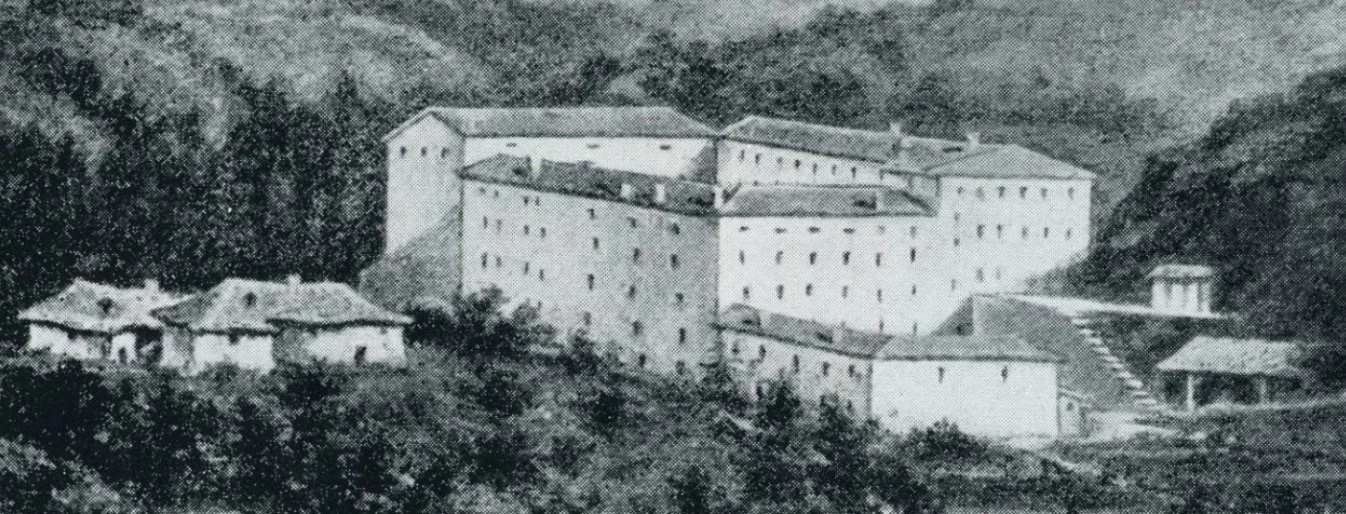
From the establishment of their first school in Sydney in 1872, Marist ministries expanded rapidly across education and social outreach. The creation of the Marist Association of Saint Marcellin Champagnat in 2015 marked a critical development in this rich Australian Christ- centred story, that has been consistently characterised from the very beginning by generous inclusiveness and deep respect for the many beautiful, life-giving, traditions of our Catholic Faith.
Historical and Ecclesial Context

Catholic education in Australia developed under challenging conditions following the withdrawal of government funding in the 1870s. Religious orders, including the Marist Brothers, sustained and expanded schools through the commitment of religious women and men. By the mid-twentieth century, Catholic schools educated one fifth of the nation’s children, as is the case today.

However, the decades following the Second Vatican Council brought profound change in Australian Catholic education. Declining religious vocations and increasing government financial support led to a rapid transition from religious to lay leadership. By the 1990s, lay educators dominated Catholic school leadership. This change necessitated renewed expressions of Church engagement by Catholics in God’s mission.

Lay Formation and the Emergence of the Association

From the early 1990s, the Marist Brothers in Australia prioritised the formation of lay educators, recognising their enthusiasm and natural Christian witness, influenced by Marist spirituality and tradition, in their daily work with young people. Over time, this purposeful formation complemented a strong sense of shared identity among lay and religious Marists in their shared works.

The formal establishment of the Marist Association in 2015 represents the institutional expression of this development. With over 1,100 members and more than fifty local groups, the Association provides a framework for prayer, community, formation, and mission. Its elected Council, entrusted with governance responsibilities for certain ministries, reflects well a vision of Church, God’s people, as co-responsible for making Jesus known and loved.

Ecclesial Movements and Charism

The Association can be understood within the broader context of post- conciliar ecclesial movements. Such movements are typically characterised by strong lay participation, a shared spirituality, and a commitment to the Gospel expressed through the Eucharist, prayer, community life and formation.

The Marist Association shares these characteristics, while drawing on an established and ever-evolving spiritual tradition. Its emergence reflects a broader diversification of ecclesial life, in which new forms of participation and shared mission are evident.

Identity and Purpose

A key and ever-present question concerns the purpose of the Association. While it contributes to the vitality of our Marist institutions, its primary identity is not institutional. Rather, it is a spiritual and ecclesial reality grounded in the action of the Holy Spirit.

The Association brings together individuals who seek to live as followers of Jesus, in a way that was inspired by Saint Marcellin. Its aspiration for canonical recognition as an Association of Christ’s Faithful underscores its identity as a community of persons rather than an aggregation of works.

Governance and Ongoing Questions

The development of the Association raises important questions regarding governance and ecclesial identity. These include the appropriate relationship between the Association and the Marist Institute, the degree of autonomy it should exercise, and the alignment of mission across structures.

While civil incorporation in 2022 has formalised aspects of governance, canonical recognition remains an ongoing process. These questions reflect broader theological considerations regarding authority, charism, and participation within the Church.

Emerging from decades of intentional spiritual formation, the Marist Association embodies a renewed understanding of charism and spirituality as shared and participatory

Conclusion

The Marist Association of Saint Marcellin Champagnat represents a most significant development in the evolution of Marist life in Australia. Emerging from decades of intentional spiritual formation, it embodies a renewed understanding of charism and spirituality as shared and participatory.
As both movement and structure, the Association reflects the dynamic interplay between institutional stability and spiritual vitality within the Church. Its future will depend on its capacity to remain faithful to its spiritual traditions while responding creatively to the evolving needs of Church and society.

Personal reflection

It has been a privilege to serve the Marist Association, especially in the development of processes and procedures that will hopefully endure in helping to shape and strengthen its future in service, encouragement, and leadership on our shared journey in Faith. Whilst the work undertaken in the nascent years of the Association will be remembered fondly for its importance and significance, the friendship, laughter and overwhelming sense of the Spirit evident in those with whom I worked will be what warms the heart and brings a smile in the years ahead.


Frank Malloy
National Director
Marist Schools Australia
Former Executive Officer
Marist Association of St Marcellin Champagnat


Star of the Sea Champagnat Marists, Lay and Brothers, Gather in Fiji for Historic First Family Assembly

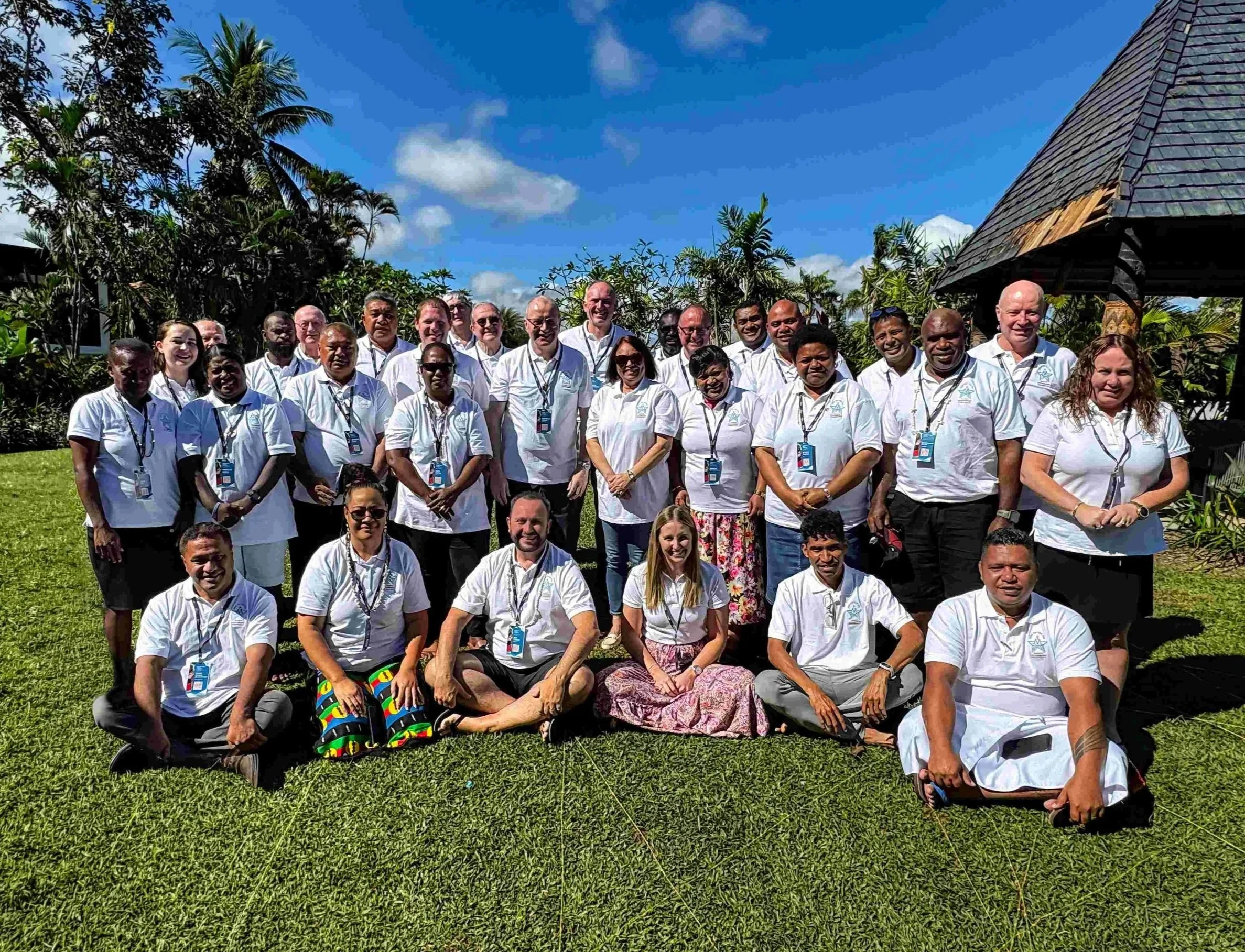
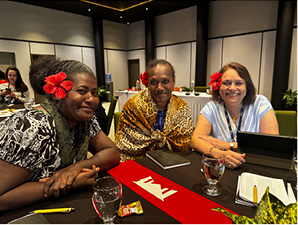
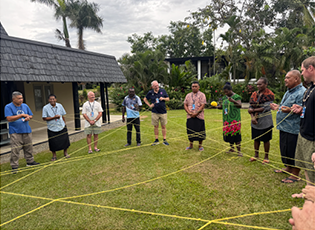
Participants in the first Champagnat Family Assembly gather together for a group photo, in Nadi, Fiji.

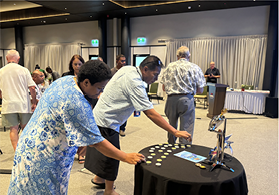
For the first time since the establishment of the Star of the Sea Province in 2022, lay Marists and Brothers gathered in Nadi, Fiji, for the Champagnat Family Assembly, held from 17–20 May. The Assembly marked a significant milestone in strengthening collaboration, connection, and shared mission across the Province, bringing together 35 Marists from every country within the Province, including representatives from Aotearoa New Zealand, Australia, Cambodia, Fiji, Samoa, Kiribati, New Caledonia, Solomon Islands, Timor-Leste, Papua New Guinea, and Vanuatu.

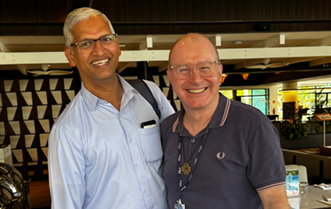
The gathering was attended by Provincial, Br Darren Burge; General Councillor and Link Councillor for Oceania, Br Rajakumar Soosai Manickam; and Provincial Councillors Br Ken McDonald, Br Peter Horide, Br Greg McDonald, Br Bryan Davis, and Br Sefo Une.

Cultural Ceremony

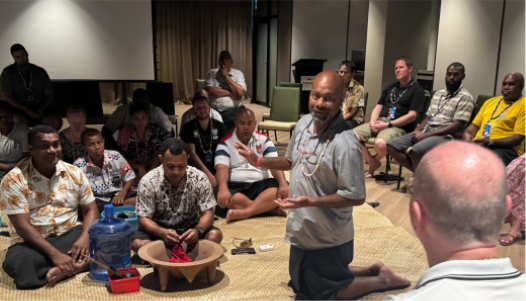
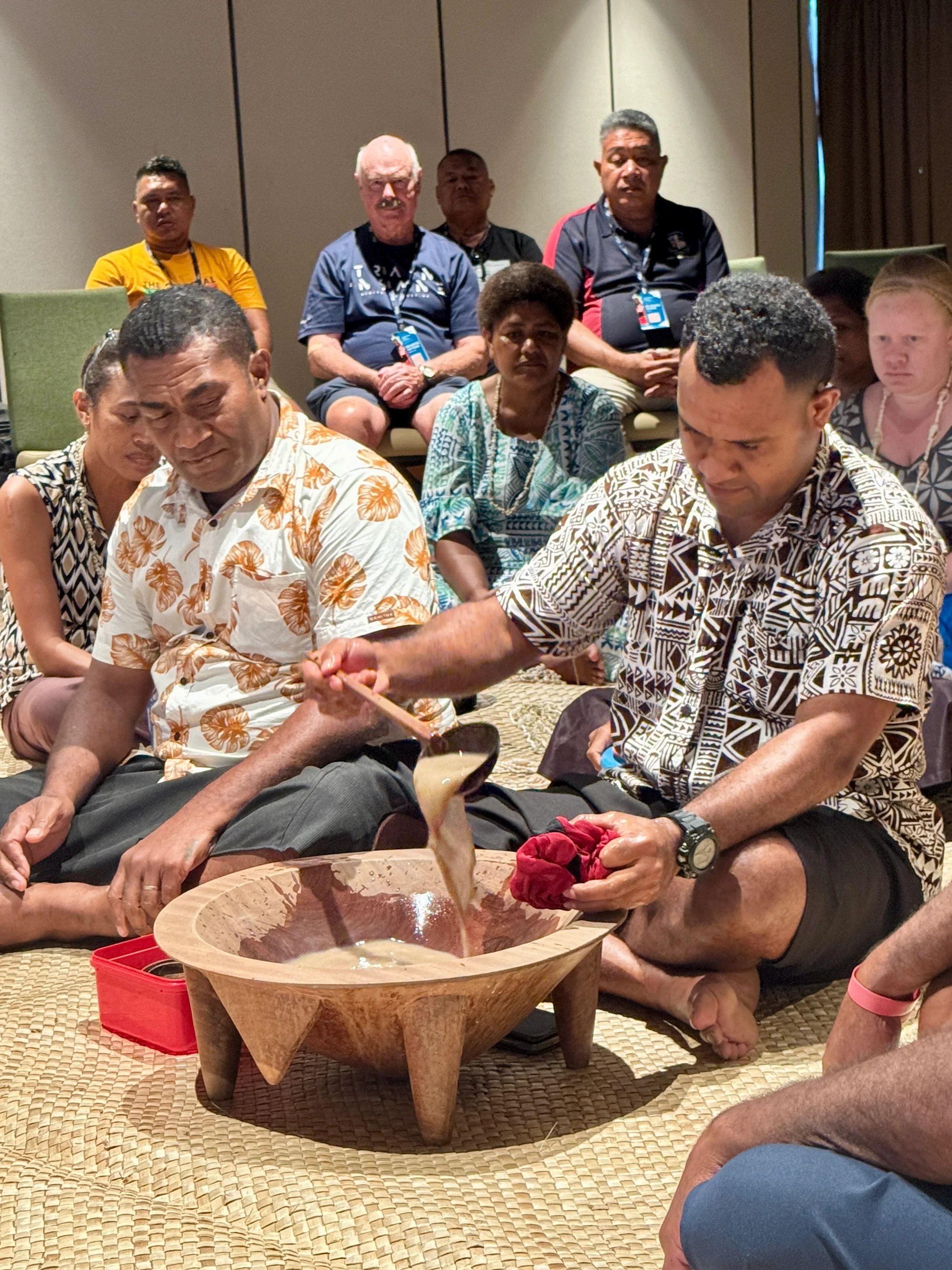
The Assembly officially opened on the evening of 17 May with a deeply moving traditional Fijian sevusevu ceremony led by lay Marists in Fiji. The sevusevu, a traditional expression of welcome and hospitality, set a reflective and culturally grounded tone for the days ahead. Receiving the ceremony as chief guest, Br Darren expressed gratitude for the hospitality of the Marist family and acknowledged the years of preparation that had led to the gathering.

“This gathering has been a long time in the making,” he said. “The Champagnat Family Commission and the Province have spent considerable time building relationships and conversations across the Province so that when we gathered, we could engage with greater depth, trust, and purpose.”

Chair of the Champagnat Family Commission, Br Michael Callinan, acknowledged the extensive work of the Commission in preparing for the Assembly and individually recognised its members: Daniel Dungey from Aotearoa New Zealand; Nathan Ahearne, Jess Bryan, Mark O’Farrell and Mark Pauschmann from Australia; Br Siaosi Ioane from Samoa; Br Anitelea Fidow and Mereoni Matanitobua from Fiji; Ruth Hiriru from Solomon Islands; and Br Melquiano Obe from Timor-Leste.

Three Key Priorities

Br Michael explained that the Commission’s work has centred on three key priorities: strengthening identity, connection, and belonging among Champagnat Marists; encouraging local grassroots initiatives and cross-cultural learning; and fostering communication and collaboration across countries and regions through formation opportunities and assemblies such as this one.

Spiritual Conversations

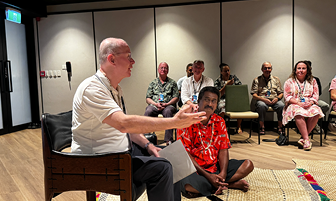
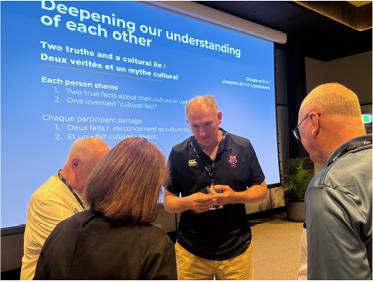
Throughout the Assembly, participants engaged in a synodal process of Spiritual Conversation that shaped the rhythm and direction of the gathering. Introducing the process, Br Michael explained that communal discernment and conversation are deeply rooted within the Christian tradition and invite participants to listen authentically and respectfully to one another, allowing the Spirit of God to speak through shared reflection and experience.

Participants reflected on questions such as: “What surprised me?”, “What might the Holy Spirit be saying to us?”, “Where do I sense joy, resonance, or tension?”, and “Where do we see convergence or divergence emerging?”

The Assembly also explored deeper questions connected to personal vocation and shared mission, including: “What do I celebrate about who I am as a Marist and what I do in my place of ministry?” and “What do we celebrate about who we are and what we do in our places of Marist ministry?”

These conversations invited participants to reflect both personally and collectively on their identity, vocation, and ministry. Discussions highlighted the importance of formation, accompaniment, hospitality, intercultural understanding, and creating spaces where people feel welcomed, valued, and heard.

As the Assembly progressed, conversations moved towards a more practical and future-focused reflection centred on the question: “As we consider our future together as the Star of the Sea Province in communion and mission, what might be our opportunities and challenges?”

Areas for Growth

Participants identified several important areas of growth and opportunity for the Province moving forward. A strong focus was placed on strengthening formation and leadership development, particularly in supporting emerging local leaders, young teachers, and those taking on new responsibilities within the Marist mission.

Over the course of four days, the Assembly encouraged a deep sense of unity and hope among everyone. Through prayer, dialogue, and cultural exchange, the gathering truly strengthened relationships across the Province and affirmed a shared commitment to the Marist mission in the Pacific and beyond.

For an extensive coverage of the Champagnat Family Assembly, visit the News page of the Star of the Sea Province website.


Gayatri Nair
Communications Officer
Star of the Sea Province


Stewarding the Marist Charism in Contemporary Education


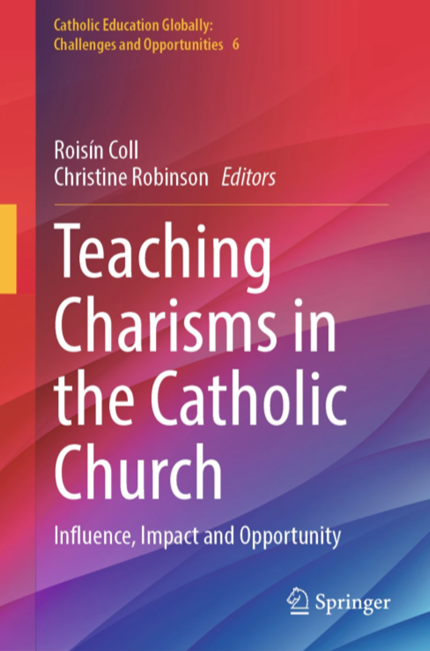
Catholic education worldwide is undergoing a significant transition as responsibility for mission and identity shifts increasingly from religious congregations to lay leaders and governing bodies. Teaching Charisms in the Catholic Church: Influence, Impact and Opportunity (Springer, 2026) addresses this reality by exploring how the founding charisms of teaching congregations continue to shape education in new contexts.

At the heart of the book is a clear understanding of charism as a Spirit given gift

At the heart of the book is a clear understanding of charism as a Spirit given gift, expressed through lived practices and cultures rather than static forms. It is not a legacy to be preserved unchanged, but a living mission to be reinterpreted in each generation. This aligns strongly with the Marist commitment to “creative fidelity”: remaining faithful to Champagnat’s vision while responding imaginatively to contemporary realities.

Br Michael Green’s chapter, “New paradigms for Marist communion and co responsibility,” highlights a decisive shift from congregation centred leadership to shared mission among religious and lay partners. Charism is transmitted less through the presence of religious and more through relationships, leadership practices, governance, and culture. Authority is exercised within a logic of communion, placing responsibility on leaders and boards to steward and animate Marist identity.

A central insight emerging from the work is that charism endures only when embedded in a living community of faith that owns and continues to develop it. Structures alone cannot sustain spirituality. A charism lives where it is consciously practised, reflected upon, and allowed to grow. From such communities emerge future leaders, scholars, formators and governors, ensuring both continuity and renewal.

This has clear implications for our Marist context. The primary focus must be on nurturing a vibrant Marist spiritual family marked by vitality and integrity. This is the distinctive contribution of the Marist Association: fostering a broad, participatory community in which most members are engaged in Marist life and mission at the grassroots level. From this lived experience, authentic leadership and governance can emerge.

While governance structures remain essential, the Marist pathway begins with a faith community

In this respect, our Marist approach differs from some other models that prioritise boards or trustees as the starting point for sustaining charism. While governance structures remain essential, the Marist pathway begins with a faith community - belonging, formation, and shared mission - and develops leadership and governance from within. This represents an importantly different “new paradigm,” and a concrete expression of “creative fidelity” in our time.

A key contribution is the insistence that charism does not endure by default. Without intentional formation, as we have through our Marist formation programs, it risks becoming superficial or symbolic. Sustained formation - especially of leaders and governors - is therefore a strategic imperative linked to mission integrity and organisational sustainability.

The book also reaffirms the core characteristics of our Marist charism: presence, simplicity, family spirit, love of work, and Mary as model of discipleship. Together, these form an integrating framework that gives Marist education its distinctive character.

For boards and advisory councils, this means stewardship goes beyond compliance and financial oversight. It involves testing decisions against mission, ensuring leadership alignment with charism, and seeking evidence that Marist identity is genuinely lived in practice. In a lay led era, it prioritises governance for mission.

In summary, the book affirms that our Marist charism remains a vital gift. Its future lies not in preservation alone, but in our conscious, communal, and courageous stewardship - ensuring that St Marcellin’s Marist Project continues to be lived with creative fidelity today.


Richard Quinn
Executive Director


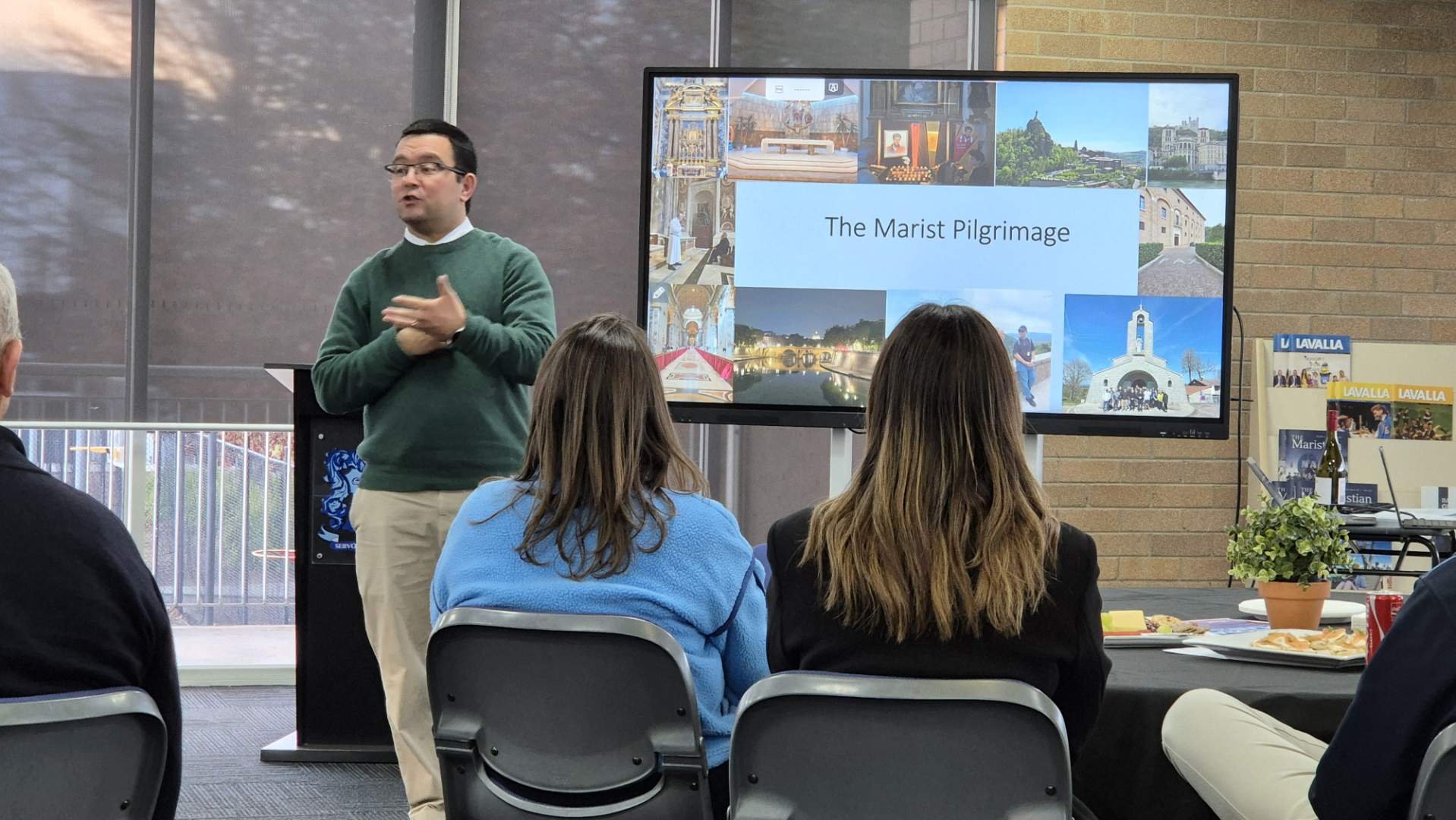
Marist Pilgrimage 2026

Grateful for the shared journey

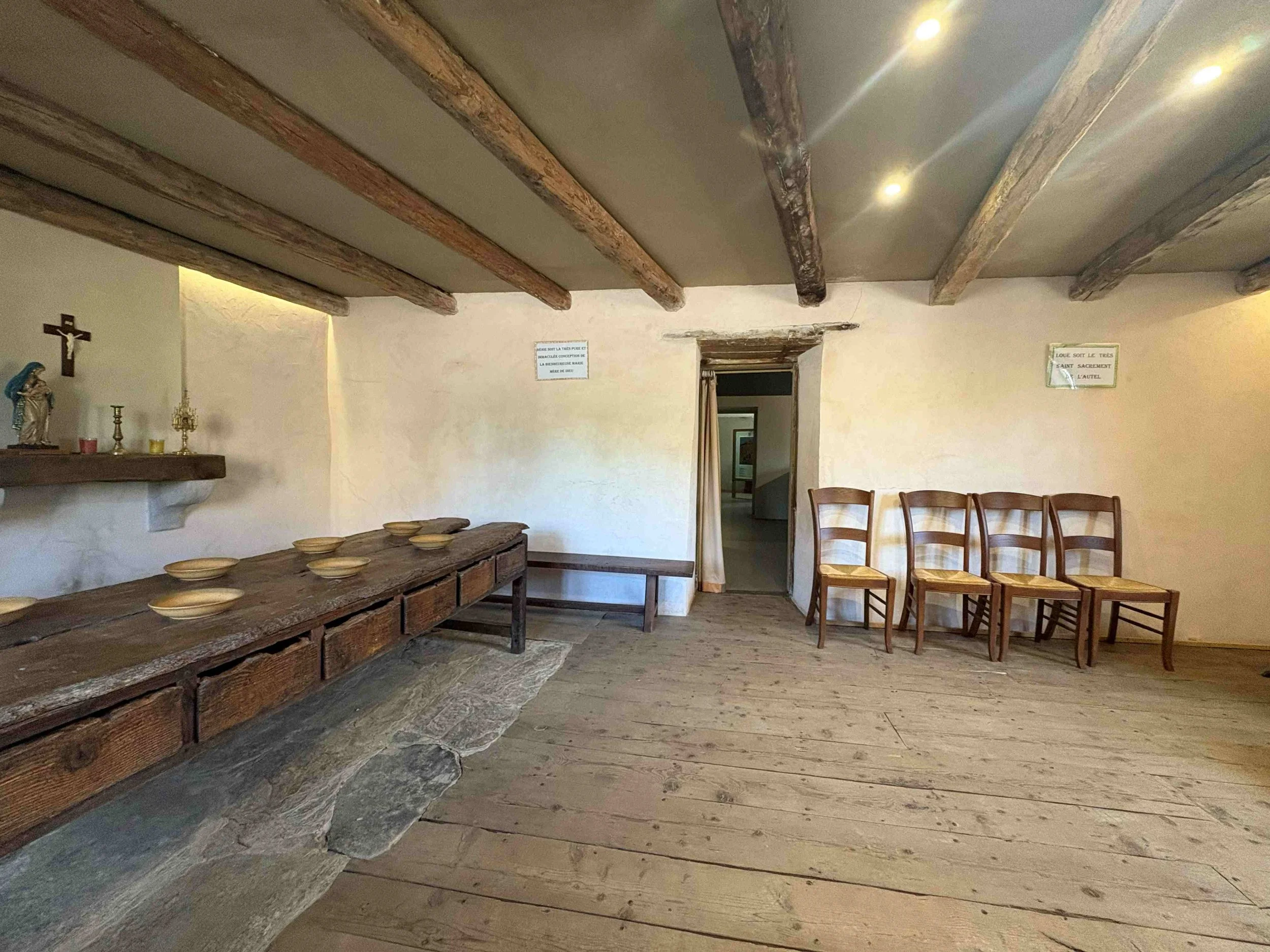
The table that Marcellin Champagnat built, at La Valla, France.
“Who are you becoming?” was the question that was posed to our group of pilgrims by Br David Hall, as we commenced the 2026 Marist Pilgrimage in Rome. A question which didn’t demand an immediate answer, but one which we were invited to revisit as we undertook the rich experiences over our two-week journey together.

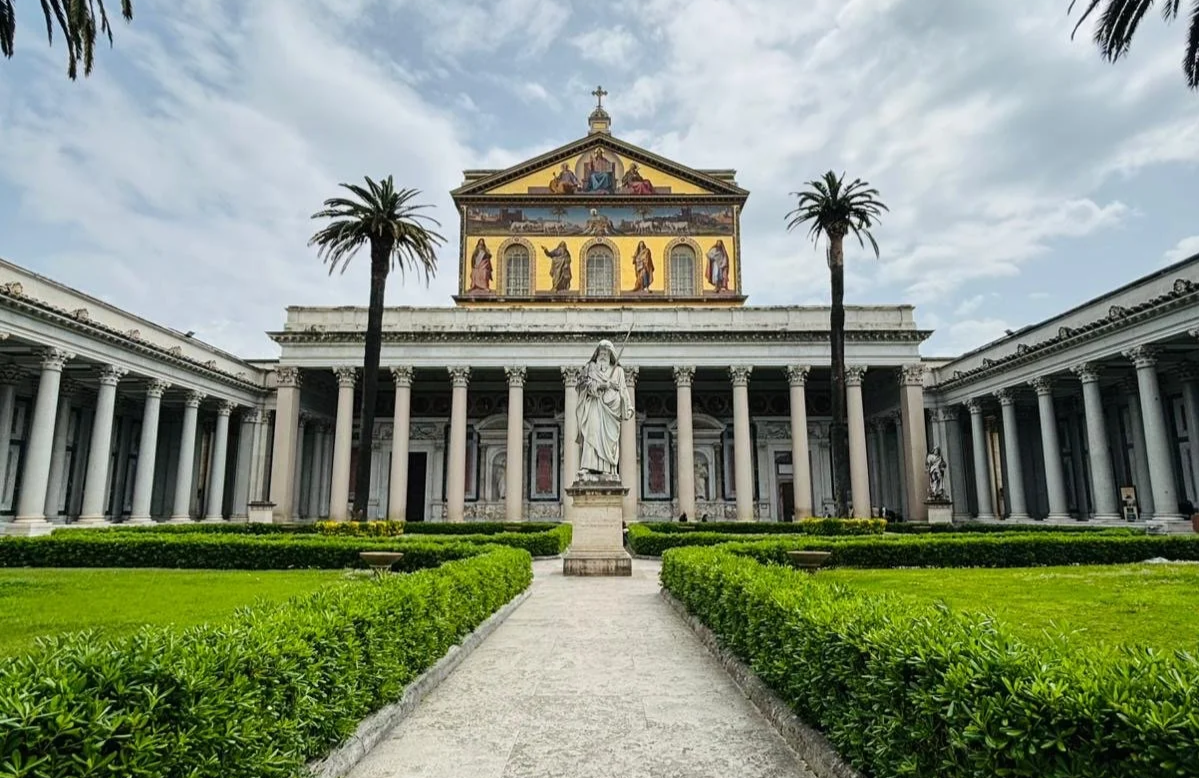
Basilica of St Paul Outside the Walls, Rome.

The first half of our pilgrimage journey provided the opportunity to look beyond the historical significance and grandeur of the places visited throughout Italy, to the deep spiritual traditions foundational to the ongoing life of the Catholic Church. Beginning with the Petrine, Pauline, Marian and Johannine spiritualities of the early Christian communities and connected to the four Papal Basilicas in Rome. Through to Saint Benedict at Subiaco, exploring contemplation and living as community, and then taking this out of the monasteries and into the world with Saint Francis at Assisi.

There was also a connection with the expression of the contemporary Church in Rome, with San Egidio and a shrine to modern day martyrs, the Secretariat for the Synod of Bishops and, of course, our global Marist family through the warm welcome received in our visit to the Marist General House.

These experiences, masterly animated and guided by Br David Hall, laid the foundations for our pilgrims to look at the story of our own Marist spirituality, as we journeyed to France.

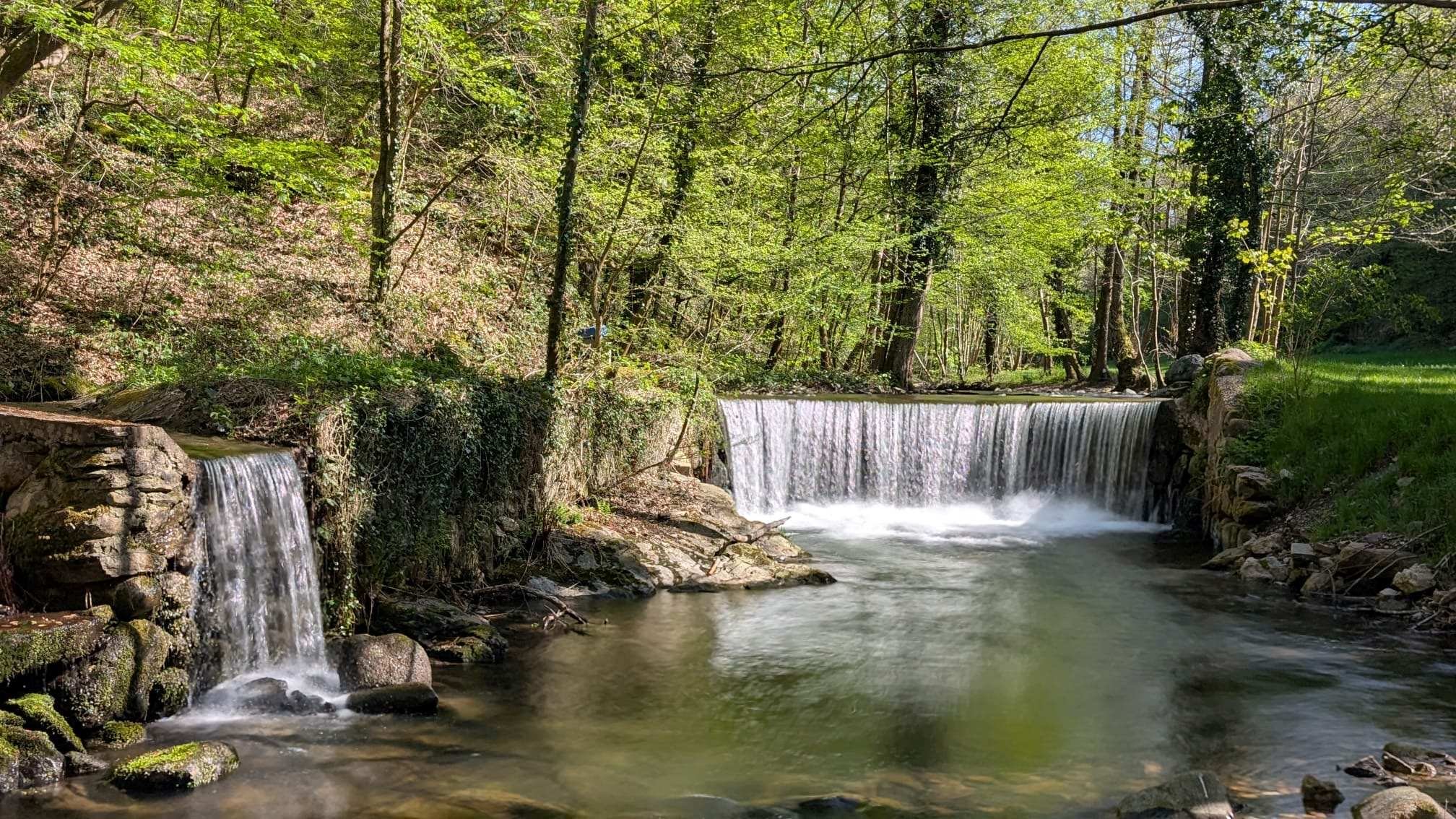
The beauty of the Gier River, flowing near l’Hermitage, France.

Arriving in Lyon our pilgrimage group was wrapped in anticipation as we ventured closer to the Hermitage, awaiting a first glimpse. There we were met with a simple message from our guide and leader for the next week, Br Michael Green, “Welcome home”.

We could not have been accompanied by a better guide to explore Champagnat country. At our first gathering, Br Michael urged that if we had come there to find Champagnat we would leave disappointed, but rather that our time would be better spent seeking what Saint Marcellin and his first companions found.

The following days did not disappoint. Venturing to the places so familiar in our story, La Valla, Le Rosey, Marlhes, Le Puy, Fourvière, to name a few. Treks through the hill country that brought to life our Marist spiritual texts and documents. The quiet moments of prayer, reflection and daily Mass, inviting each pilgrim to consider the significance for our own lives.

A moment that was particularly moving for me was at the house at La Valla, when we had gathered to celebrate Mass around Saint Marcellin’s table. As I sat directly facing the doorway and entrance to the room, I was struck by the fact that I was more taken by the old door frame in front of me than the La Valla table in the room to my left. My eyes continued to be drawn to the exposed wooden lintel above the doorway, the beam that keeps the opening from collapsing under the weight of the wall above. I began to ponder the countless number of Marists that had walked through that doorway over the years, invited in, to gather around the same table. It made me consider the incredible generosity of the Brothers, who have held this door open for others over many years, welcoming us into a story, spirituality and shared mission to make Jesus known and loved. I was struck by the great privilege that we have, living together today as one family in our Marist Association, and was moved with a deep sense of gratitude for all the Marists who have shaped my journey.

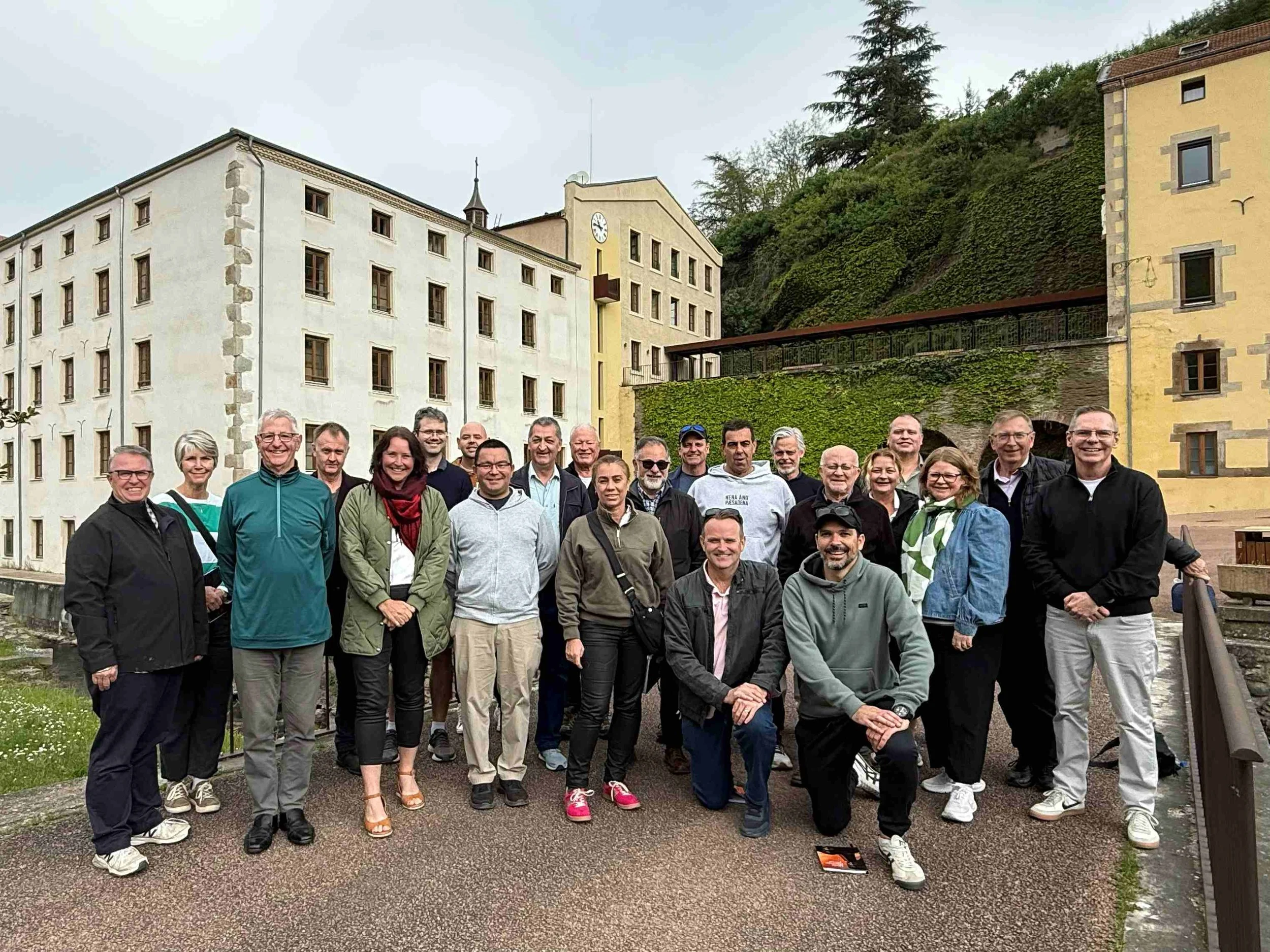
The 2026 Marist Pilgrimage group at l’Hermitage, France.

A few weeks after returning from pilgrimage and returning to Br David’s question, ‘Who are you becoming?’, I am not sure I am closer to answering the question. After all, ‘life is a mystery that is revealed as it unfolds’ (Water from the Rock, 44). I do, however, come away with a much deeper sense of whose footsteps I want to follow and those who I want to share the journey with.

Michael Neylan
Marist Mission and Life Formation Team
Marist Spirituality Hub


Marist Youth Ministry: Our Regional Assistants

Across Australia, Marist Youth Ministry continues to be enriched by the generosity, faith and energy of young adults who step forward to accompany the next generation of Marists.

Our Regional Assistants are more than event facilitators or ministry leaders, they are witnesses to Christ life within their communities, bringing their own gifts, experiences and stories to our mission of making Jesus Christ known and loved.

Each has been shaped in unique ways through the Marist story, and each now offers that same spirit to the students and young adults they encounter through Game Changers, Connect Nights, retreats and formation experiences. The following profiles offer a glimpse into the lives, passions and faith journeys of the young adults who make up our MYM team in 2026.


GEORGE BISHOP – QLD, NT & NORTHERN NSW:
Marist College Ashgrove graduate George Bishop was deeply shaped by his years within the Marist community, particularly through involvement in the College’s Mission Department. For George, the Marist characteristic of Family Spirit captures what has most influenced his faith and sense of belonging. A defining moment in his journey was participating in an immersion experience to Santa Teresa, which strengthened both his faith and desire to work in ministry. Through MYM, George hopes to provide students with opportunities to encounter belonging, connection and faith through retreats and Connect Nights. Outside ministry, he enjoys composing cinematic music, singing and spending time at the family farm.


SAM MEAD – QLD, NT & NORTHERN NSW
A graduate of Marist College Ashgrove, Sam Mead joined Marist Youth Ministry after spending two years serving with NET Ministries on the Sunshine Coast. Deeply inspired by the Marist characteristic of Presence, Sam is passionate about accompanying young people and helping them encounter faith, not simply as part of school life, but as a lifelong journey of discipleship. Alongside MYM, he studies Environmental Management at the University of Queensland, remains active in parish ministry and Ignite Youth, and enjoys bushwalking, music and spending time in nature.


MARCUS KHOURY – NSW & ACT
Marcus Khoury, a graduate of Parramatta Marist High School, brings a strong sense of community, accompaniment and care to his role within MYM. Inspired especially by the Marist characteristic of Family Spirit, Marcus believes deeply in helping others feel known, supported and valued. His own faith journey was significantly shaped through Game Changers and the witness of mentors and Regional Assistants who encouraged him to explore the deeper meaning behind his beliefs. Now in ministry himself, Marcus hopes to offer young people that same sense of encouragement and belonging as they navigate their own faith journeys. Outside of MYM, he enjoys bouldering, volleyball and discovering new alt-R&B and indie music.


TAKODA CHENG – NSW & ACT
Takoda Cheng first became involved with Marist Youth Ministry through an internship with the NSW & ACT team, where he assisted in the preparation and facilitation of retreats, formation programs and youth ministry events. His participation in the 2024 Cambodia Immersion became a defining experience, deepening his spirituality through encounters of service and solidarity. Takoda has also been involved in leadership initiatives focused on social justice and homelessness awareness within his school community. Alongside university studies, work and involvement with the Rural Allied Health and Medicine Society, Takoda brings strong organisational skills, adaptability and a collaborative spirit to his role. He hopes to help young people discover purpose, community and faith through the Marist charism.


JOSEPH KHALIL – NSW & ACT
Joseph “Joey” Khalil is a graduate of Parramatta Marist High School, where his connection to the Marist family first grew through school life, retreats and the Game Changers program. For Joey, being part of the Marist community means belonging to something bigger than himself and remaining closely connected to his faith. The Marist characteristics of Family Spirit, Love of Work and In the Way of Mary continue to shape the way he approaches ministry and relationships with others. Inspired by the mentors who accompanied him throughout his own faith journey, Joey hopes to help young people grow in confidence, faith and belonging through Game Changers and MYM. Outside of ministry, he enjoys travelling, spending time with friends and listening to pop music.


We have introduced you to some of our 2026 MYM Regional Assistants. In the next edition of Christlife Connect you will meet the remaining members of the team, from South Australia and Victoria.


Justin Golding
MSA Senior Leader
National Youth Ministry & Formation


Keeping Faith Alive: One Youth Minister’s Vision for Marist College Ashgrove

Hi everyone, My name is Ben Mead, and I’m a youth minister at Marist College Ashgrove, alongside Lachie Vink. So, a little bit about me: I went to Marist College Ashgrove (MCC) as a student and graduated in 2025, so it’s safe to say, I must have missed the place because no more than two months later, I was back!

Today, I’m going to be sharing my story for Christlife readers, specifically talking about my journey toward youth ministry and what the role has been like.

Growing up Catholic and going to MCC since Grade 5, I realised that there was a very large amount of outreach needed, a pretty large amount of outreach going on, and, sadly, not a large enough group of people volunteering their time to cover all the needs of the community. I firstly saw this through our MATES program at Ashgrove, which stands for MARISTS are Taking Everyone Seriously. It is our outreach slogan, and is the reason why we do so much of what we do; everyone deserves dignity and to be taken seriously - it’s straight from our Catholic social teachings.

I was especially drawn to the faith side of this - the call as Christians to serve our community, not just because it’s a good thing to do, but because it is the literal fruit that keeps our faith alive, as seen in James Ch 2. Whilst you don’t have to be a Christian to do good things, I think we can all agree that if the whole school was deepened in faith and belief, then the community could be a very different place. This led me to where I am now in my position as a youth minister. I truly believe that the faith life of the students is the most important thing they can learn from coming to Ashgrove, and that isn’t something I took lightly. I came into the year determined to almost ‘re-evangelise’ the school.

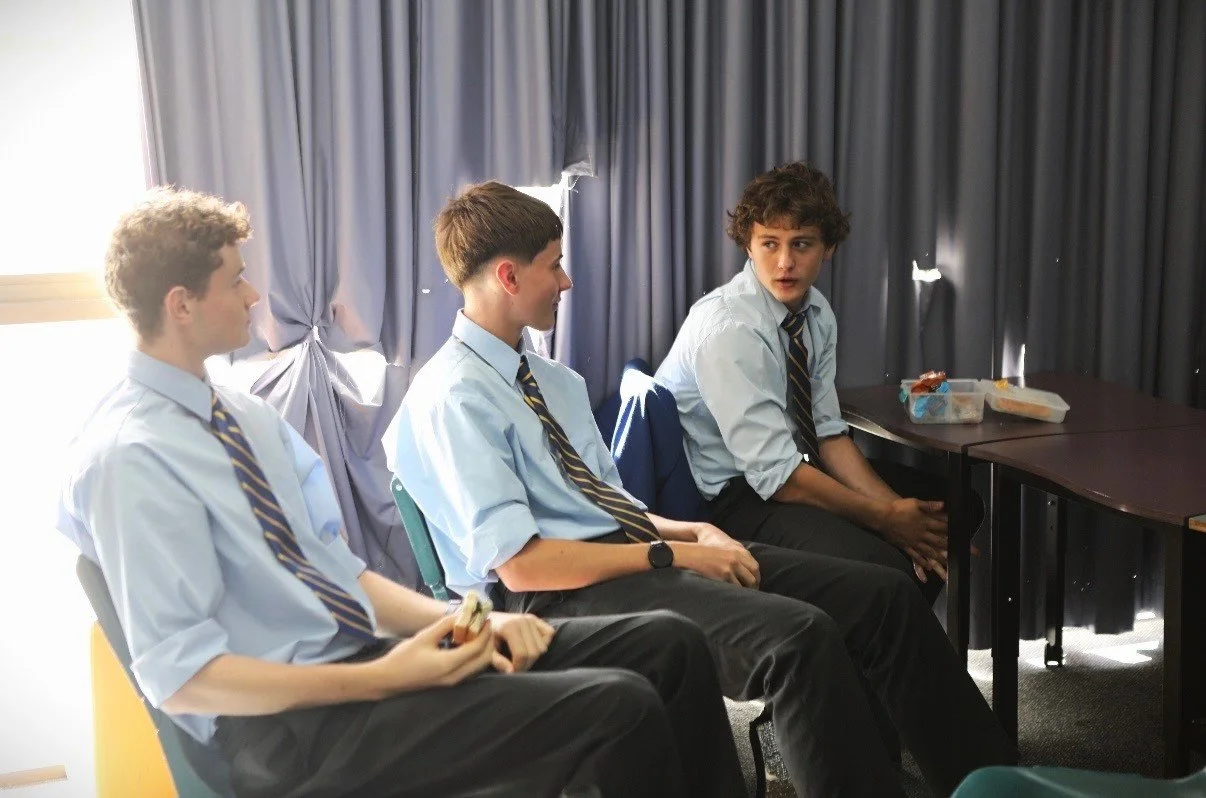
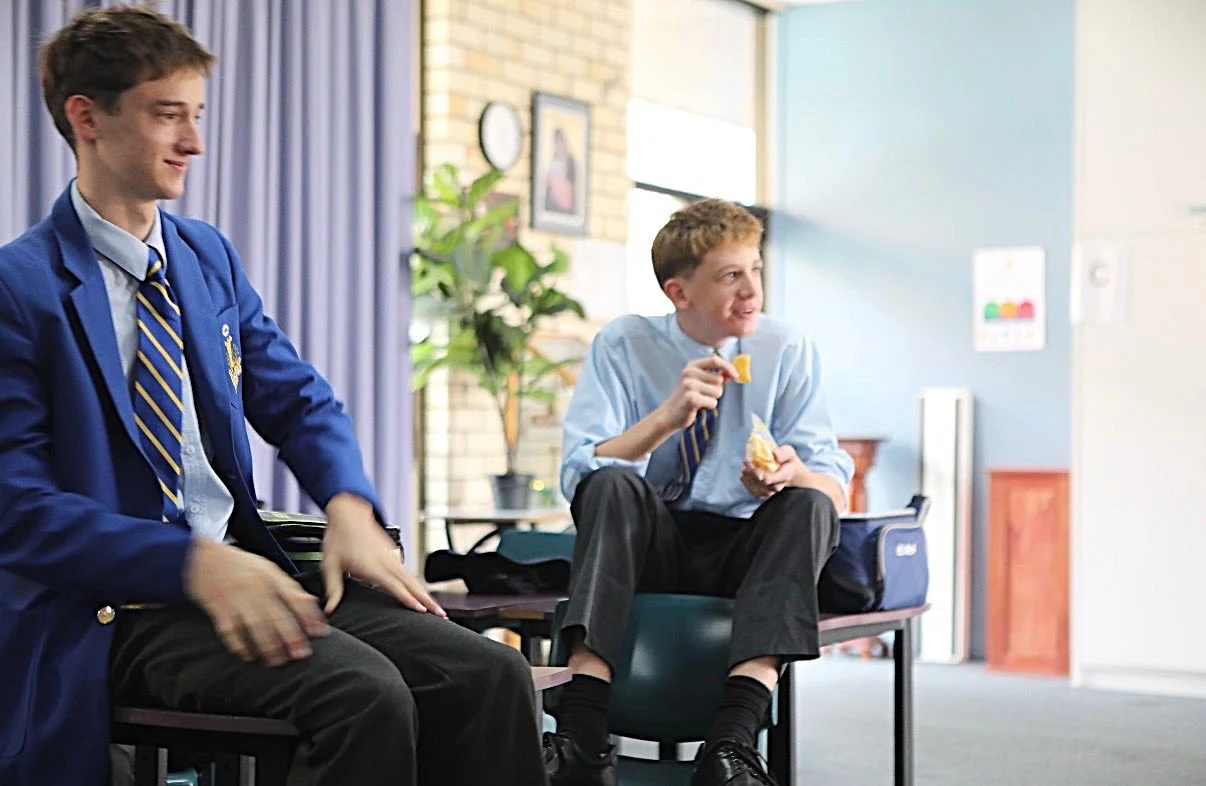
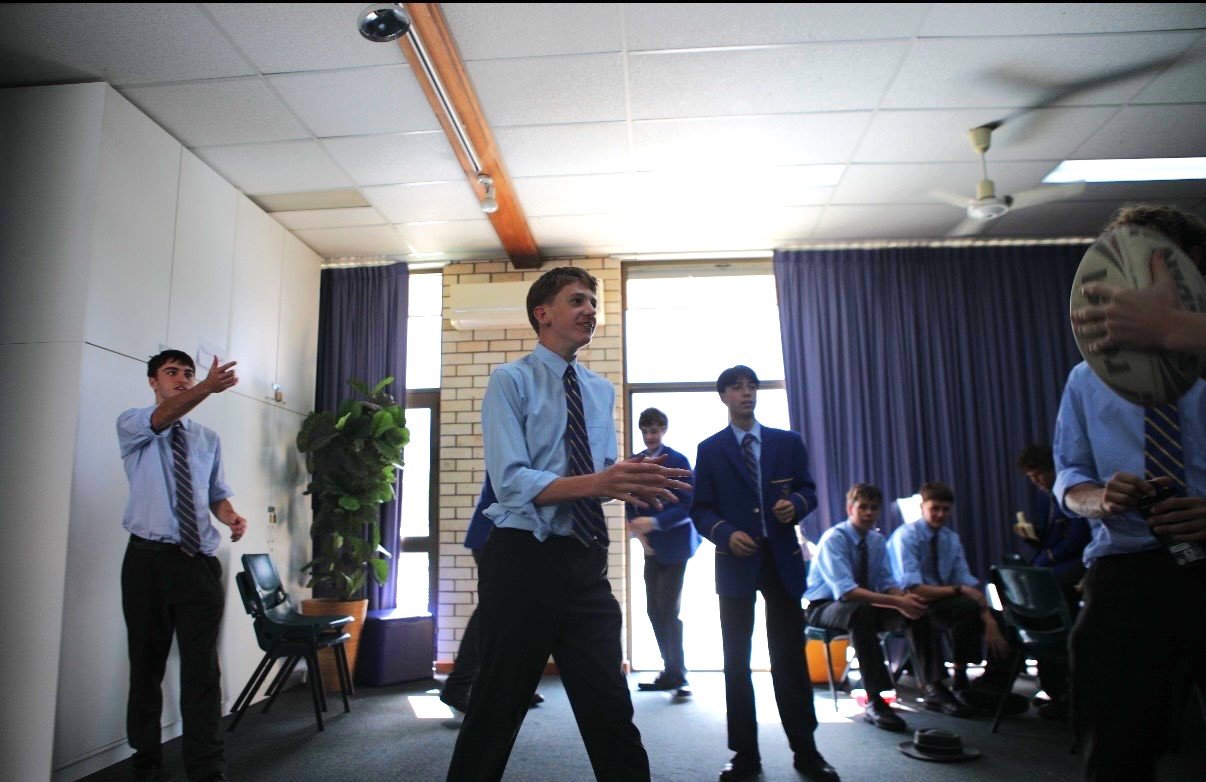
This, and photos below: Grade 11 students at Marist College Ashgrove in discussion at a recent Game Changers event.

At the forefront of this plan: the Game Changers program. The mission of Game Changers is to take students on a two year faith journey called a ‘track’, with a 7-8 track, 9-10 track, and 11-12 track. I was so keen to get started with Game Changers, but struggled with so many different perspectives, with part of me wanting to go deeper into faith in these sessions, and another part of me that could tell that, if I crossed a line, it would push some people away. A lot of students in the program aren’t strong believers or believers at all, and what a blessing that is to have them, but it can bring a level of perplexity as to how to bring God into a situation where some have a shallow faith, and some no faith, without just seeming crazy?

I realised that it takes time, and I can’t expect everyone to be fully for God in an instant

Thursday Theology Group

I realised that it takes time, and I can’t expect everyone to be fully for God in an instant. But that didn’t change the fact that there were still some boys wanting to discuss and go deeper, but couldn’t do this in Game Changers, so this brought about the start of the Thursday Theology group. About five boys and myself now meet every week to discuss anything from denominational debates to the presence of the Eucharist, the assumption of Mary, and even the morality of a loving God who gives us free will.

So now, as well as all our social justice and outreach groups, there is Game Changers, and there is the Theology Group, and my goal is to bridge the gap - not fully, but enough that it doesn’t feel like you’re choosing one or the other when it comes to your faith.

A retreat-style approach

This is still a work in progress, but one plan that’s being put in action is for an ‘All in Arvo,’ where boys from all ages and all groups, as well as anyone in the school, can meet for an hour and a bit after school, for a retreat style afternoon. The goal is to make this a monthly event, and it aims to bring everyone together, and reach a deep enough level in faith that the boys in the theology group can get something out of it, whilst having teachings and lessons that won’t scare away others.

That’s my story of how I came to be one of the two new Youth Ministers at Marist Ashgrove. It means a lot to have a huge community behind me, and backing me and the mission. Thanks for tuning in, God bless.


Ben Mead
Youth Minister
Marist College Ashgrove


What we Invest in is What we Value:

Why Budgets are moments that matter for Children, Families and Housing

Investment is often framed as a financial decision. A calculation. A trade-off between competing priorities. But at its core, investment is something much simpler - and much more revealing. What we choose to invest in is what we care about. Budgets, whether at a household or government level, are more than lines on a ledger. They are expressions of values. They show us, in real terms, what matters enough to act on, and what does not.

As we approach the upcoming New South Wales Budget and reflect on the Federal Budget being handed down this week, this lens matters more than ever. Because the decisions made in these budgets will shape the lives of children, young people and families for decades to come.

Investment is a statement of care

We often talk about children and young people as our ‘future.’ But this language, while well-intentioned, can sometimes obscure a more urgent truth. Children are not just our future; they are our present responsibility. In our work across communities, we see the impact of this every day. When investment in early support, family stability, and safe housing is insufficient, the consequences are immediate and compounding:

  • Families are stretched beyond capacity

  • Young people disengage from education and community

  • Demand for crisis services rises

  • Systems become reactive, not preventive

In these moments, the absence of investment becomes its own form of decision-making.

Because when we do not invest early, we invest later - in crisis responses, in statutory systems, and in outcomes that are harder and more expensive to shift.

What families need is the right support at the right time

Across New South Wales and nationally, the child, youth and family sector has been clear and consistent. There is a call, not simply for more funding, but for investment that delivers the right support at the right time.

Investment that:

  • Prioritises early intervention and family preservation, so children can remain safely connected to their families and communities

  • Strengthens community-based services, particularly those that are culturally grounded and locally led

  • Recognises the overrepresentation of Aboriginal and Torres Strait Islander children and invests in self-determined, community-controlled responses

  • Ensures the best possible outcome for children and young people in care

  • Addresses workforce sustainability, ensuring that skilled practitioners can continue to do this work well

These are not abstract ideas. They reflect what practitioners, families and communities have been telling us and what the evidence has confirmed over many years. The question is no longer whether these approaches work. The question is whether we care enough to invest in them at scale.

Housing is where the clearest story is told

If budgets reveal what we value, housing is where that truth is most visible. Because without safe, stable housing, everything else becomes harder and often, impossible.

  • Education continuity breaks down.

  • Family stress escalates.

  • Risks to safety increase.

  • Services are forced to work around instability rather than build on stability.

We see this play out in real time - young people trying to stay connected to school while experiencing housing instability, families navigating crisis without a stable base to rebuild from.

This makes clear that when housing is unstable, it limits what other supports can achieve. That’s why the Federal Government’s commitment of $60 million to establish a National Youth Housing Supplement in this week’s Budget matters. A campaign, lead by Home Time Campaign Youth Housing Coalition, has been critical to this Federal Government commitment; Marist180 is a proud member of this coalition, a grateful supporter of this campaign and an advocate for this commitment.

This investment recognises something fundamental, that when we care about children and young people, we invest in the foundations that allow them to thrive. It reflects growing recognition that housing is not a secondary issue, but a critical enabler of stability, connection and opportunity, particularly for young people who have too often been locked out of access.

A moment of choice

Budgets are moments of choice.

They ask us to decide - not in principle, but in practice - what matters most. At this point in time, the choice is clear. We can continue to invest in systems that respond to crisis or we can shift toward investment that prevents it. We can maintain fragmented approaches or we can build integrated systems that support children, young people and families earlier, and more effectively.

What will these Budgets say about us?

When the details of the NSW and Federal Budgets settle, the question will not just be ‘what was funded?’

It will be:

  • What did we choose to prioritise?

  • Whose needs were recognised—and whose were deferred?

  • What kind of future did we invest in?

Because budgets tell a story and if we listen and analyse closely, they tell us exactly what we value.

In closing

If investment is a reflection of care, then this moment calls for clarity. To care about children and young people is to invest in:

  • Their families

  • Their communities

  • Their stability

  • Their futures

Not in words, but in decisions.

Because ultimately, what we invest in is what we care about - and what we care about shapes the kind of society we become. And in words offered in February 2026 to an International Summit on Children’s Rights, Pope Leo encourages them and us:

‘you are speaking on behalf of those who have no voice. This is a truly noble task. Keep that in mind when the temptation to be discouraged arises because of failed initiatives, seeming lack of interest from others or the sense that the situation is not improving. Let the good you know you are doing carry you forward.’


Jane Powles
Partnerships and Advocacy Coordinator, and

Patrick O’Reilly
Director Mission, Inclusion and Identity


Preserving Language, Expanding Learning: San Isidro’s Latest Milestones

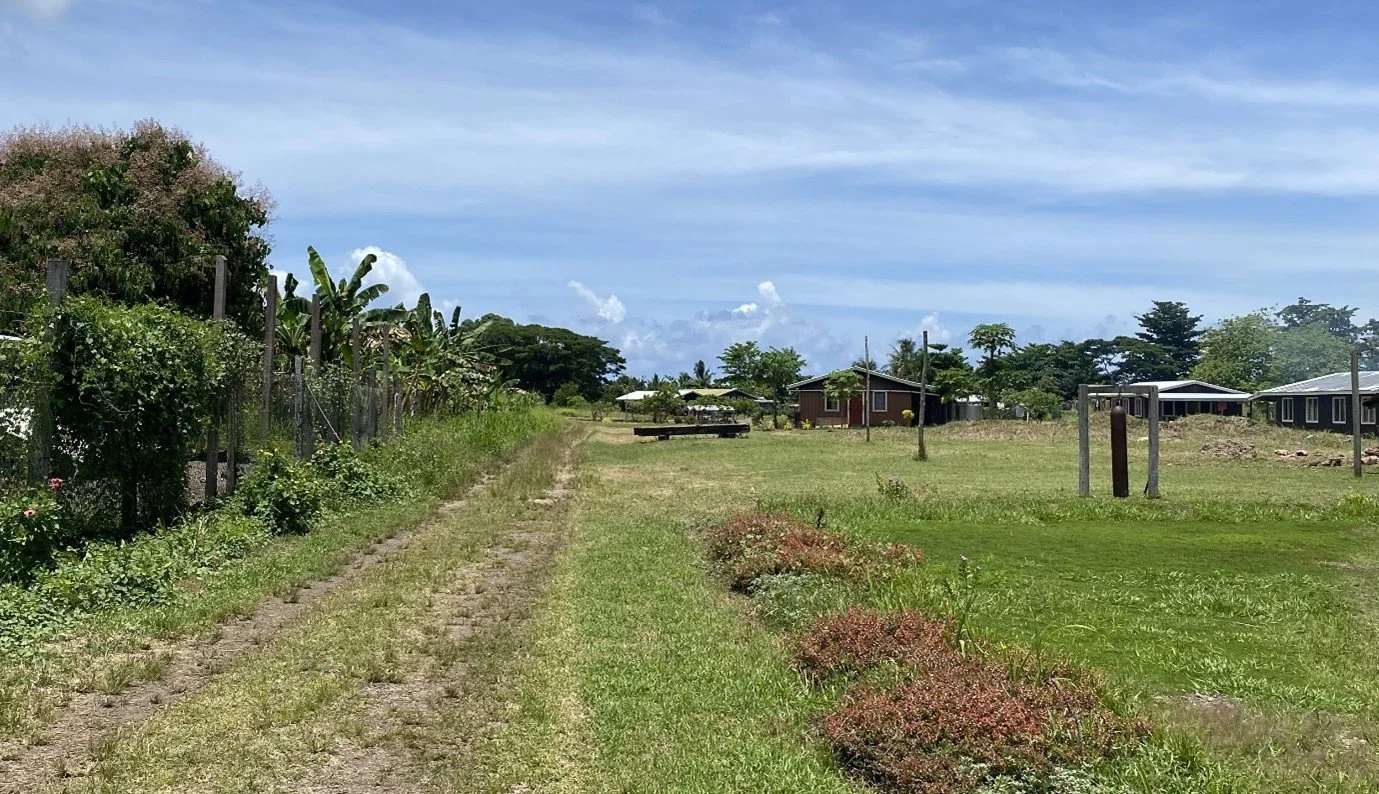
View of part of the San Isidro Care Centre property, Solomon Islands.

At San Isidro Care Centre in Solomon Islands, learning is measured not just by lessons completed, but by confidence gained, connections formed, and the moment a young person realises they belong. The Centre’s latest project - focused on sign language resources, digital access and community outreach - marks a meaningful step in strengthening that vision.

Expanding Access and Inclusion

At its heart, the project aims to improve communication, education and inclusion for deaf and hard-of-hearing students across Solomon Islands. It brings together three priorities: developing sign language resources, increasing community awareness, and improving access to digital tools for learning.

Each of these areas responds to practical challenges. Together, they ensure that deaf students are better supported to build language, skills and opportunities for the future.

Preserving and Growing Language

A key achievement has been the documentation of sign language used at the Centre. Over three dedicated days, around 400 commonly used signs were recorded, capturing the vocabulary central to daily learning and interaction.

This material has been compiled into a video resource, forming the foundation of a broader, evolving library. Importantly, students themselves will review and validate the signs, ensuring accuracy and authenticity. Their input will guide the next phase, which will expand the collection by more than 400 additional signs, particularly those used in vocational training.

This collaborative approach reinforces the role of students as custodians of their own language, while strengthening the relevance of the resource.

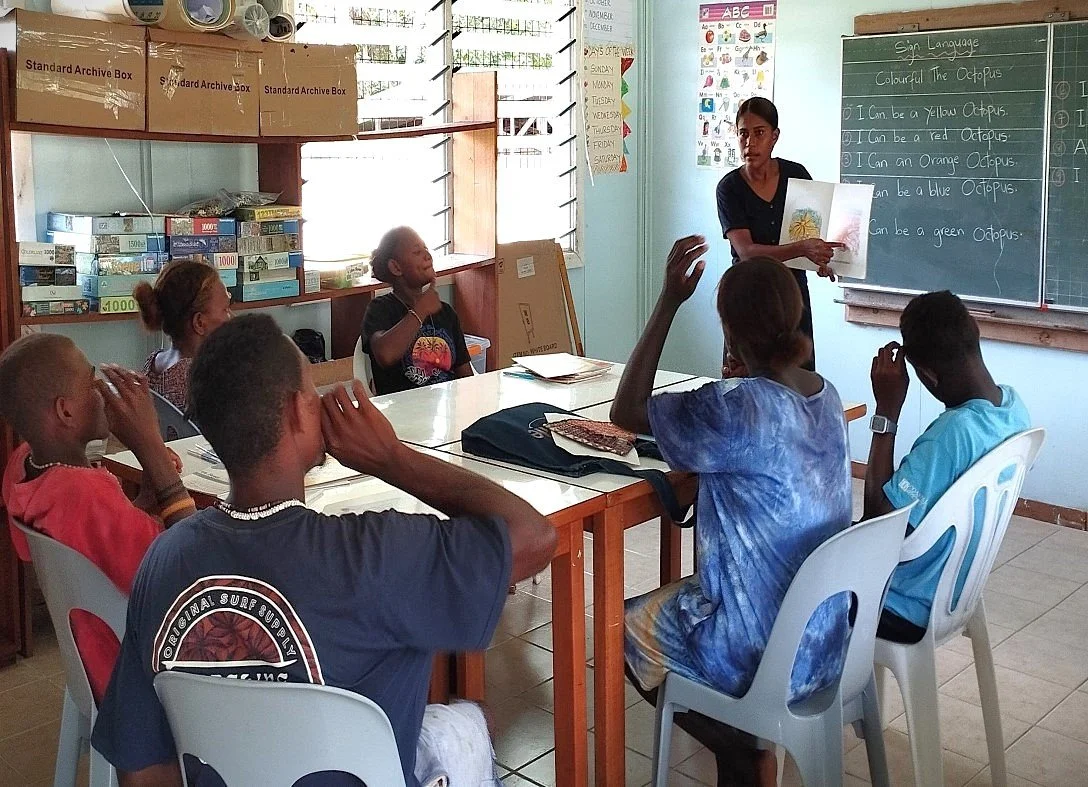
A teacher and students share a moment of learning and connection at San Isidro Care Centre, where inclusion and opportunity shape everyday life.


Opening Digital Pathways

Digital access has also transformed learning at the Centre. The installation of Wi‑Fi on 15 December 2025 created new opportunities for both students and staff, enabling access to online learning materials, improved communication, and stronger administrative systems.

Building on this, staff participated in digital training in February 2026, supported by partners from Woodford International School. The training focused on safe browsing, email use and everyday digital tools. These skills are already improving day-to-day operations and supporting the Centre’s long-term sustainability.

Strengthening Community Connections

Outreach remains central to the project’s success. Efforts to connect with remote communities have helped identify and support deaf young people who may otherwise go unnoticed.

Following the Christmas period, staff member Margaret Kafoko joined outreach visits to several islands, leading to new enrolments, including one student who travelled back with her to the Centre. Additional students joined in February, reflecting growing awareness of the Centre’s work.

Local leadership has been critical. Advocacy from community figures, including school advisory board members and faith leaders, has helped extend the Centre’s reach. Partnerships with organisations such as the Solomon Islands Deaf Association and the Disability Peoples Association continue to strengthen these efforts.

Jerry has found a future defined by possibility

Jerry - A Story of Belonging

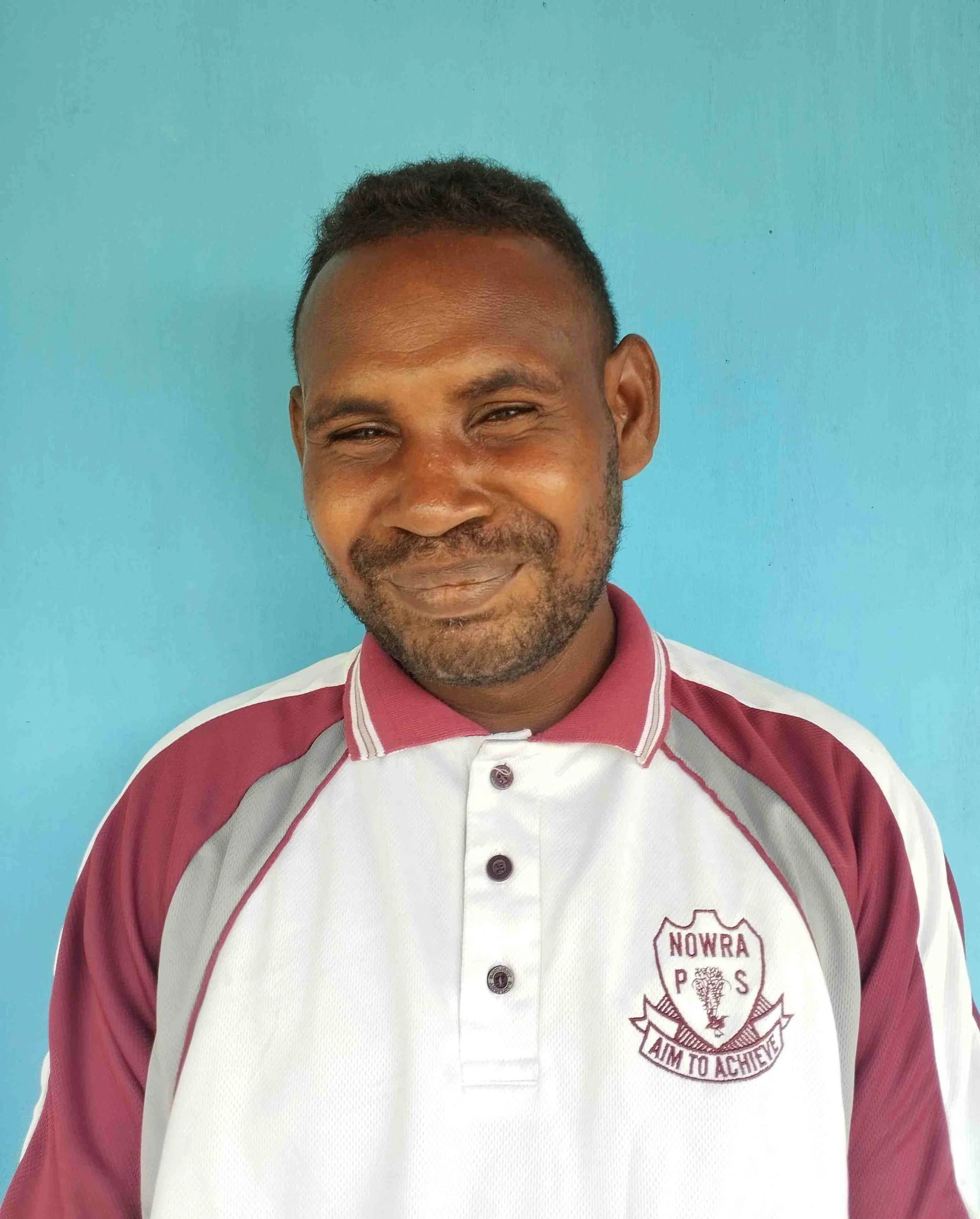
The impact of the project is best seen through the lives it touches. Jerry, a 24-year-old from the Russell Islands, arrived at the Centre with determination to learn. Born deaf and living with Autism Spectrum Disorder, he had faced considerable challenges.

Since joining San Isidro, Jerry’s growth has been significant. He has developed greater independence, improved communication skills, and increased confidence. He now participates actively in vocational training, works cooperatively with others, and adapts well to daily routines.

Most importantly, Jerry has found a sense of belonging - within a community, among peers, and in a future defined by possibility. His journey reflects the broader impact of inclusive education and support.

Jerry, 24, from the Russell Islands, is building skills, confidence and community at San Isidro Care Centre in Solomon Islands.


Looking Ahead

The long term vision of San Isidro Care Centre is ambitious and hopeful: a future where 90% of deaf people in the Solomon Islands are literate and skilled, and where the Centre’s sign language resources are embedded within the country’s broader sign language framework.

This project is more than infrastructure or documentation. It is about giving young people like Jerry the tools to communicate, connect and flourish - and about building communities where everyone truly belongs.

How you can Empower Communities to Create Pathways to a New Future

If you would like to donate to projects like the San Isidro Centre’s sign languge resource development, you can do so through the link: Donate - Australian Marist Solidarity


Tracey Doublet

Interim Communications Officer
Australian Marist Solidarity


A Sad and Unique Story for a Marist Brother in Australia: Br Owen Breen

We are indebted to Br Peter Rodney for researching the story of Br Owen Breen, and bringing him back to mind.

During some recent research in our Archives the name of a Brother Owen came to light, along with the recognition that, because of the difficult circumstances of his life and death, he had been overlooked in the compilation of such sources as the Necrology. This short summary of what we know about our Brother Owen may help solve that deficiency.

His name was John Thomas Breen and he was born on 21 October 1886 just outside Sarina, to Patrick Breen and Mary Brennan. There were four siblings, among whom both of the daughters entered the Sisters of St Joseph and one son became a priest.

Sarina is a coastal Queensland town 300 kilometres north of Rockhampton. What led John to even hear of the Marist Brothers in that far-flung location at a time in which there were none of us in Queensland must remain a mystery.

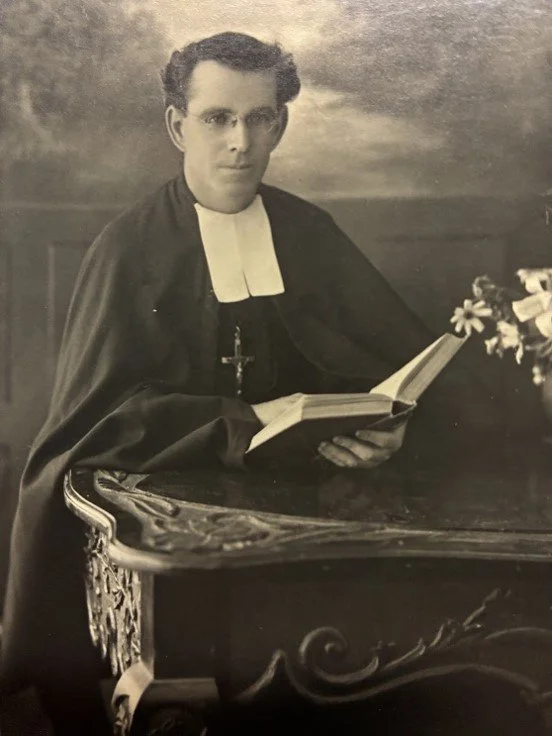
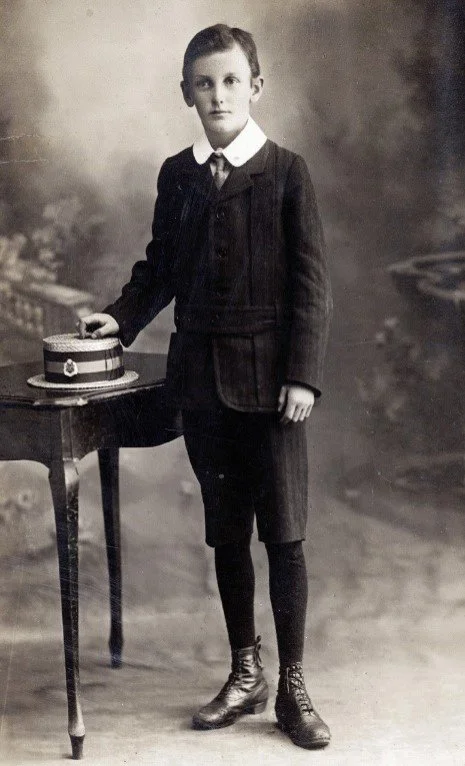
There are no found photos of Br Owen Breen in the Province Archives, but here is an image of his hometown, Sarina, Queensland.

Joining the Marists

He entered our Juniorate at St Mary’s Cathedral in Sydney on 17 January 1903, making him 16 at the time. He began his postulancy at St Joseph’s on 21 June 1904 and was given the Habit on 19 March 1905, receiving his new name of Brother Mary Owen. He made First Vows on 19 March, 1906. Everything so far seems very standard and normal.

But his record of employment and his community placements tell a different story, going by the little evidence we now have. They suggest a man who must have struggled in school and in community, since they are mostly short stays of a year or two, in many different locations ranging from Villa Maria, to Lismore, to St Benedict’s, to Glenelg, to Maitland, to Campbelltown, to Kogarah – twenty- seven shifts in all. From his Personnel Card, completed in his own hand, we know that in all these places he taught middle and lower primary, in between spells of cooking for the Brothers.

Australia at the Time

There was no universal health scheme such as we have now. Mental health was neglected and misunderstood, even among medical practitioners

In trying to make sense in our own times of the life of a Brother now long gone, we must understand we are speaking about a very different Australia. Times were poor and conditions tough, never mind the trauma of two World Wars. There was no universal health scheme such as we have now. Mental health was neglected and misunderstood, even among medical practitioners. Among the Brothers and our helpers there were no personnel devoted exclusively to care of the sick. Accommodation for the sick, such as it was, ranged from the timber “Infirmary” building at the Novitiate, to primitive cells in the Long Dorm at Mittagong, or a few bare rooms in an area within St Joseph’s College, christened, mischievously by the Brothers as “Bomb Alley”.

A History of Illness

On reading Brother Owen’s file, it is obvious we are dealing with a sick man, and mentions of “amnesia” begin to crop up. In the more copious notes from the Annals of Eastwood in the 1940s, where Owen was stationed, we get an even clearer picture: “18 October Brother Owen unwell; 23 October Brother Owen begins school again; 27 October Brother Owen gets up but does not teach; 8 November Brother Owen sick again; 22 November Brother Owen disappears from his room; Ryde police advise us to get in touch with relatives at Sarina; 27 November Brother Owen found by Ryde police on Lane Cove Road.”

Final Days at Mittagong

It seems that, shortly after these episodes, on January 9 1945, Owen was transferred to Mittagong, where, even though there would be scant medical attention, he would at least be relieved of the strain of teaching. Shortly afterwards he disappeared from the Mittagong property. Those who know the area would recognise it offers multiple opportunities for getting lost: vast tracts of untamed bush punctuated by the headwaters of the Nepean River. There were strenuous searches for him made by the novices and others, but no trace of him was ever found. Enquiries made at our instigation by the parish priest of Sarina were fruitless. We tried similar searches much later (1979) of government records but these also drew a blank: no person of that name had been recorded as deceased.

Gradually, Owen’s name and the trauma of his disappearance faded from memory. It is only just and fitting that we include him now among our loved confreres, and recognise in him a man who struggled in religious life, but did not give up. As the precise circumstances and timing of his death cannot be determined, our records have assigned to Brother Owen a notional date of death of 25 January 1945.

We pray now with the confidence that Mary, our Good Mother, received him at the end and recognised in him one of her Son’s faithful followers.

Br Michael Flanagan
Province Archivist