
Recently at Mass, the story from Matthew’s Gospel was recounted, with Jesus being posed the question: “Lord, how often must I forgive my brother if he wrongs me? As often as seven times?’ Jesus answered, ‘Not seven, I tell you, but seventy-seven times.’”
It’s a number so absurd for the audience listening at the time (and us today) that it speaks of the overly gratuitous nature of God’s love.
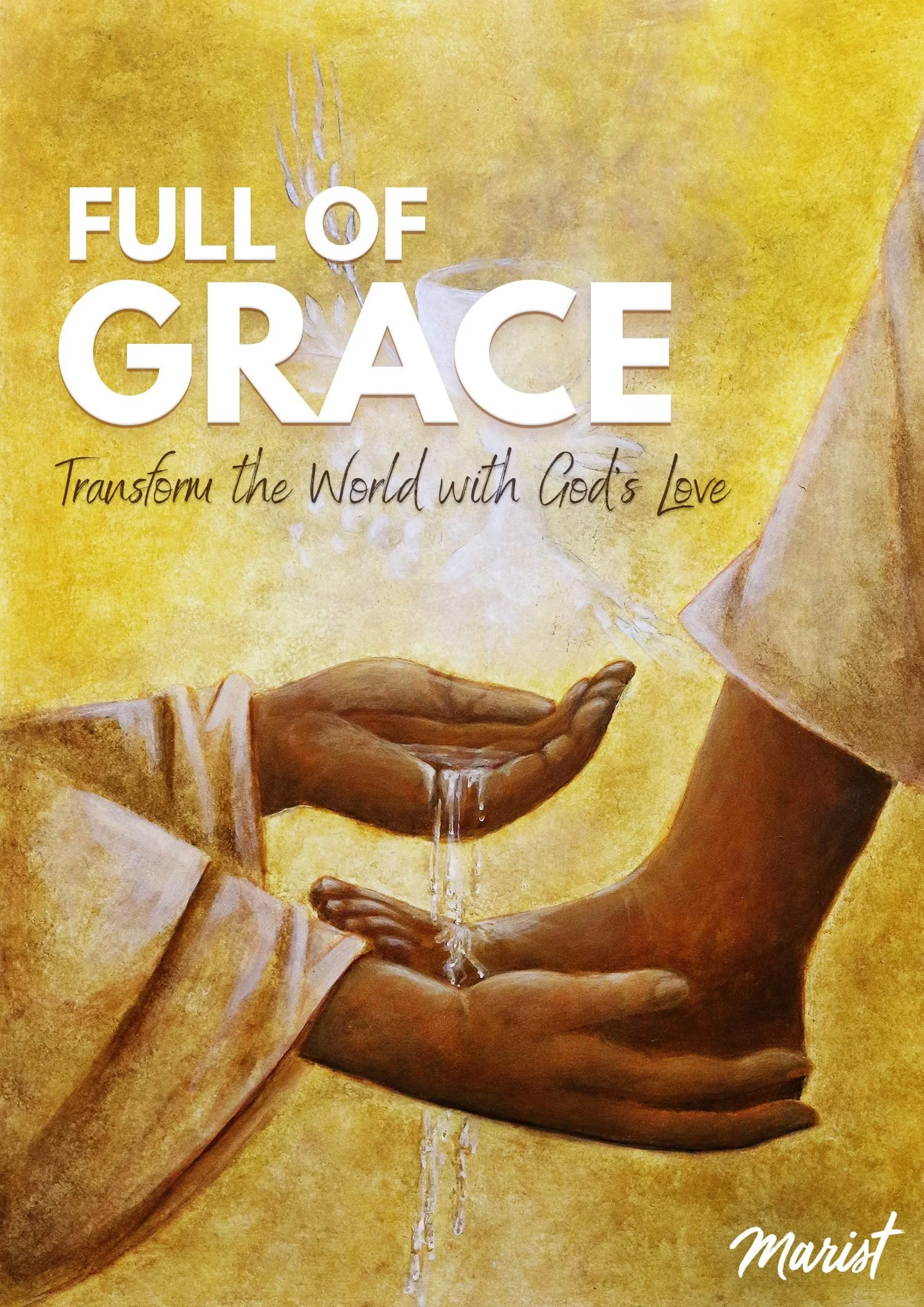
Our communities have spent much time unpacking the notion of grace through the 2026 Marist theme Full of Grace, but still I find it difficult to truly grasp the economics of grace.
At the Marist Association Mid-Winter retreat in July, Br Emili Turú took up the title - Grace, a Gift Beyond Measure. The more I reflect on the theme, the more this expression holds to be true. Grace goes beyond anything that can be measured or quantified.
In a world of efficiency and rationalisation, the economics of grace don’t stack up. On face value, it seems far too excessive and even wasteful. But that is precisely the point.
In an address last year on the occasion of the 30th Anniversary of Marist180, Br Darren Burge told of a story where, “a bright Year 11 student once challenged me about the parable of the Prodigal Son. He couldn’t understand how forgiveness could come without punishment.”[1] Of course this student is not alone in their bewilderment at the generosity of God’s grace.
Irish Dominican Priest, Fr Paul Murray, in a talk on Poetry, Beauty and the Shock of Grace, recalls a conversation with Mother Teresa in Calcutta years earlier. “That God is high, transcendent, all-powerful, almighty, I can understand that because I am so small, but that God has become small and that he thirsts for my love, begs for it, I cannot understand it, I cannot understand it, I cannot understand it.”[2]
Though it is difficult to grasp the fullness of grace, we are called to look upon others with this same love of God. In the book of Genesis, there is a beautiful expression: “Noah found grace (favour) in the eyes of God.” (Genesis 6:8) The challenge is, do others always find grace in my eyes?
Our Marist tradition perhaps offers a guide here. Br Michael Green, writing about the Three Violets (the spiritual attitudes that Saint Marcellin wanted Marists to nurture), expresses that modesty is to “put the other at the centre – respectfully, selflessly, and non-possessively. It is to be focused on them rather than myself.”
“Modesty is allowing God to be God, and to act in my life as God. It is to work to learn about God, to be alert to God’s quiet and subtle presence and movement in my life, and to allow myself to be affected by that, even transformed by it.”[3]
If we allow grace to be present, active and move in our lives, in a very simple way, we just might transform the world with God’s love. Even as unthinkable as it might seem.
Michael Neylan
Mission and Life Formation Team

Footnotes:
[1] Marist180 celebrates 30 Years, 30 October 2025
https://www.marist180.org.au/post/celebrating30years
[2] Fr Paul Murray OP. What is that Knocking? Poetry, Beauty, and the Shock of Grace. 2023 https://www.youtube.com/watch?v=BecK_-7AA8
[3] Br Michael Green FMS. The Three Violets: humility, simplicity and modesty. 2021
https://champagnat.org/en/the-three-violets-humility-simplicity-and-modesty/