
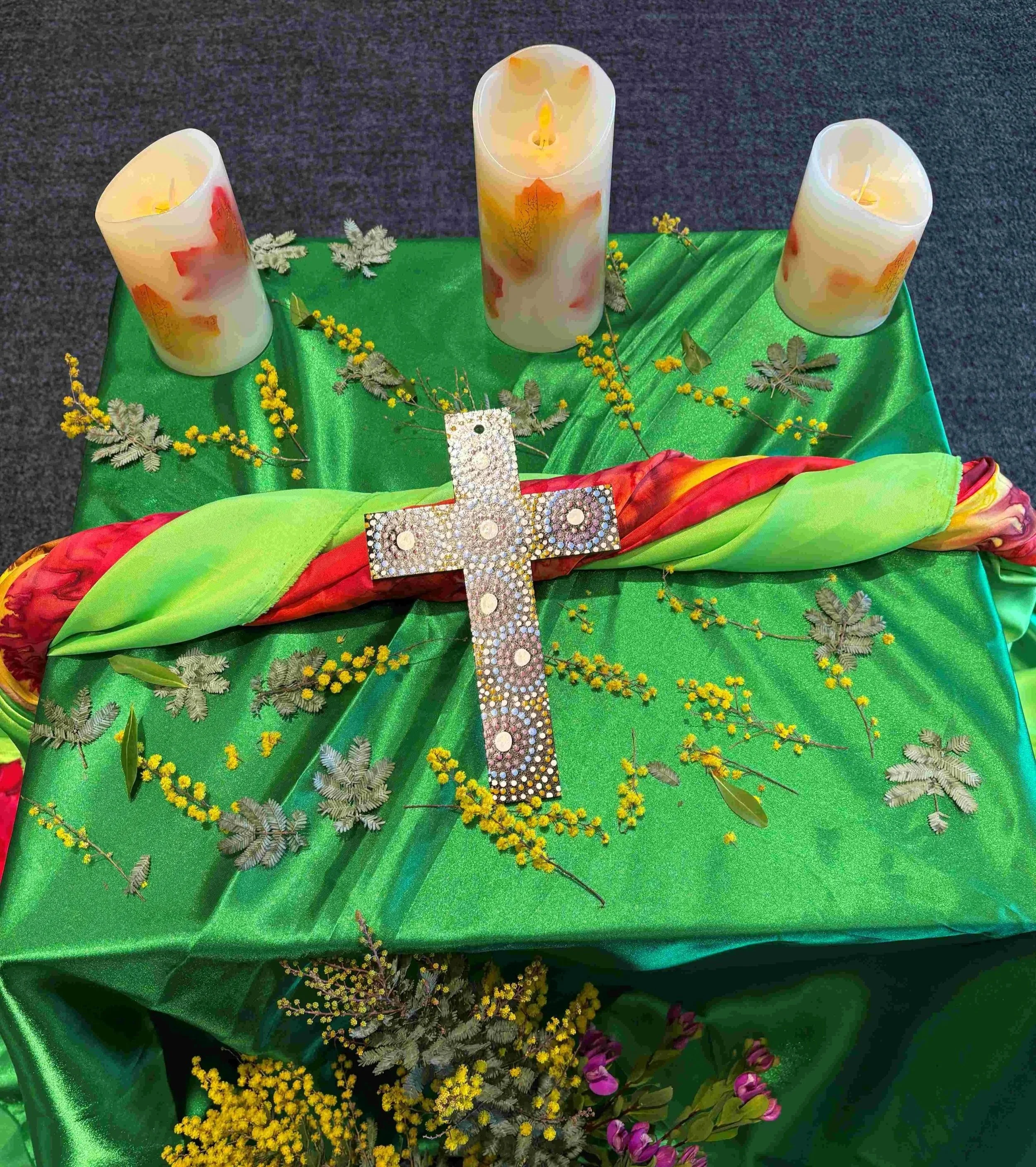
In the following reflection on our 2026 theme, Fr Anthony Casamento CMSA shares his homily from the annual Mid-Winter Retreat Mass, held at the Hermitage, Mittagong, and celebrated on Friday, 10 July (Week 14, Ordinary Time).
If we were preparing a group of people for an important mission, we would probably try to encourage them with positive words. We would tell them about the opportunities ahead, the rewards they might receive, and the success they might experience.
Jesus does something quite different in today’s Gospel (Matthew 10:16-23). As he sends out the apostles, he says: “Remember, I am sending you like sheep in the midst of wolves.” Not exactly the kind of motivational speech we might expect. Jesus goes on to speak about opposition, rejection, persecution, arrests, betrayals, and suffering. At first hearing, these words may seem discouraging. Yet hidden within them is one of the most beautiful teachings about grace in the entire Gospel. For Jesus is teaching his disciples that God’s grace is a gift beyond measure, especially when life becomes difficult.
Notice what Jesus does not say. He does not promise the apostles an easy life. He does not promise that everyone will welcome them. He does not promise success according to worldly standards. He does not promise freedom from suffering. Instead, he promises something far greater.
He promises that God will be with them. And that is grace.
“God’s grace is a gift beyond measure, especially when life becomes difficult”
Sometimes we think of grace only in terms of blessings and consolations. We recognise grace when prayers are answered, when life is peaceful, when relationships are thriving, or when things go according to plan. But the Gospel reveals another dimension of grace. Grace is also God’s presence when life becomes difficult. Grace is God’s strength when our strength fails. Grace is God’s wisdom when we do not know what to say. Grace is God’s courage working within our fears.
Jesus tells the apostles: “When they hand you over, do not worry about how you are to speak or what you are to say. You will be given at that moment what you are to say.” What a remarkable promise. Notice that Jesus does not say they will receive all the answers in advance. He does not promise a detailed roadmap. He promises something better. He promises that the necessary grace will be given when it is needed. Not before. Not after. But precisely at the right moment. This is often how God works in our lives.
We frequently want tomorrow’s grace today. We want certainty about the future. We want guarantees. We want to know how everything will unfold. But God usually gives us enough grace for the present moment and asks us to trust him with the rest. Think about the challenges we face. A serious illness. A family crisis. The loss of a loved one. Financial uncertainty. Loneliness. Disappointment. Many people who pass through these experiences later say something remarkable. They often say, “I don’t know how I got through it, but somehow God gave me the strength.” That is grace. Not necessarily removing the burden. But helping us carry it. Not necessarily changing the situation. But changing us within the situation. Not necessarily eliminating the cross. But helping us bear it.
Grace is God’s life working within our weakness. This is why Saint Paul could say, “When I am weak, then I am strong.” He had discovered a profound spiritual truth. Human weakness is not the end of the story. When we acknowledge our limitations, we make room for God’s power. The apostles themselves would learn this lesson repeatedly. Peter would face imprisonment. The other apostles would face rejection and persecution. Most would eventually suffer martyrdom. Yet they persevered. Not because they were naturally fearless. Not because they possessed extraordinary human strength. But because God’s grace sustained them.
What transformed a group of frightened disciples into courageous witnesses? Grace. What enabled Peter, who once denied Jesus, to stand before crowds and proclaim the Gospel? Grace. What gave ordinary men the strength to endure suffering for Christ? Grace. A gift beyond measure.
There is another important image in today’s Gospel. Jesus says: “I am sending you like sheep in the midst of wolves.” Ordinarily, sheep seem defenceless. Wolves appear powerful. Yet throughout Christian history, it is often the sheep who have endured while the wolves have disappeared. Empires have risen and fallen. Persecutors have come and gone. Opponents of the faith have appeared and vanished. Yet the Gospel continues to be proclaimed. Why? Because the Church ultimately depends not on human strength but on divine grace.
The same is true in our personal lives. There are moments when we feel like sheep among wolves. Perhaps we are trying to live Christian values in an environment that does not share them. Perhaps we are defending truth when it is unpopular. Perhaps we are striving to remain faithful while others compromise. Perhaps we feel outnumbered, misunderstood, or alone.
The Gospel reminds us that we are never truly alone. The grace of God accompanies us. The Holy Spirit walks with us. Christ stands beside us. That presence is worth more than any earthly security.
Perhaps the most comforting words in the Gospel are Jesus’ assurance that the Spirit of the Father will speak through the disciples. Notice that Jesus does not tell them to rely solely on their own abilities. He does not say, “Figure it out yourselves.” He points them toward the Holy Spirit.
This is good news for all of us. Too often we think the Christian life depends entirely on our efforts. We imagine that holiness is something we must achieve through our own determination. But holiness is ultimately God’s work within us. Our task is not to manufacture grace but to cooperate with it.
The Holy Spirit is already at work. The Spirit teaches. The Spirit guides. The Spirit strengthens. The Spirit comforts. The Spirit transforms. Every step of the Christian journey is sustained by grace.
At this Eucharist, we come with our own struggles and challenges. Some may be carrying worries about family. Others may be facing uncertainty about the future. Some may be burdened by grief, illness, loneliness, or disappointment. The Gospel does not pretend these realities do not exist. Instead, it offers a promise. God’s grace is greater. Not always by removing our difficulties, but by accompanying us through them. Not always by changing our circumstances, but by transforming our hearts. Not always by sparing us from the cross, but by helping us carry it.
In the Eucharist, we receive once again that gift beyond measure. We receive Christ himself. The same Christ who strengthened the apostles. The same Christ who sustained the martyrs. The same Christ who has guided countless saints through every trial.
Today he comes to strengthen us. May we trust that whatever challenges lie ahead, God will provide the grace we need when we need it. And may we discover, as the apostles did, that God’s grace is not merely sufficient. It is abundant. It is faithful. It is unfailing. It is truly a gift beyond measure.
Fr Anthony Casamento CMSA
Provincial Superior
Congregation of St Michael the Archangel (Michaelite Fathers)
Member of the Marist Association