
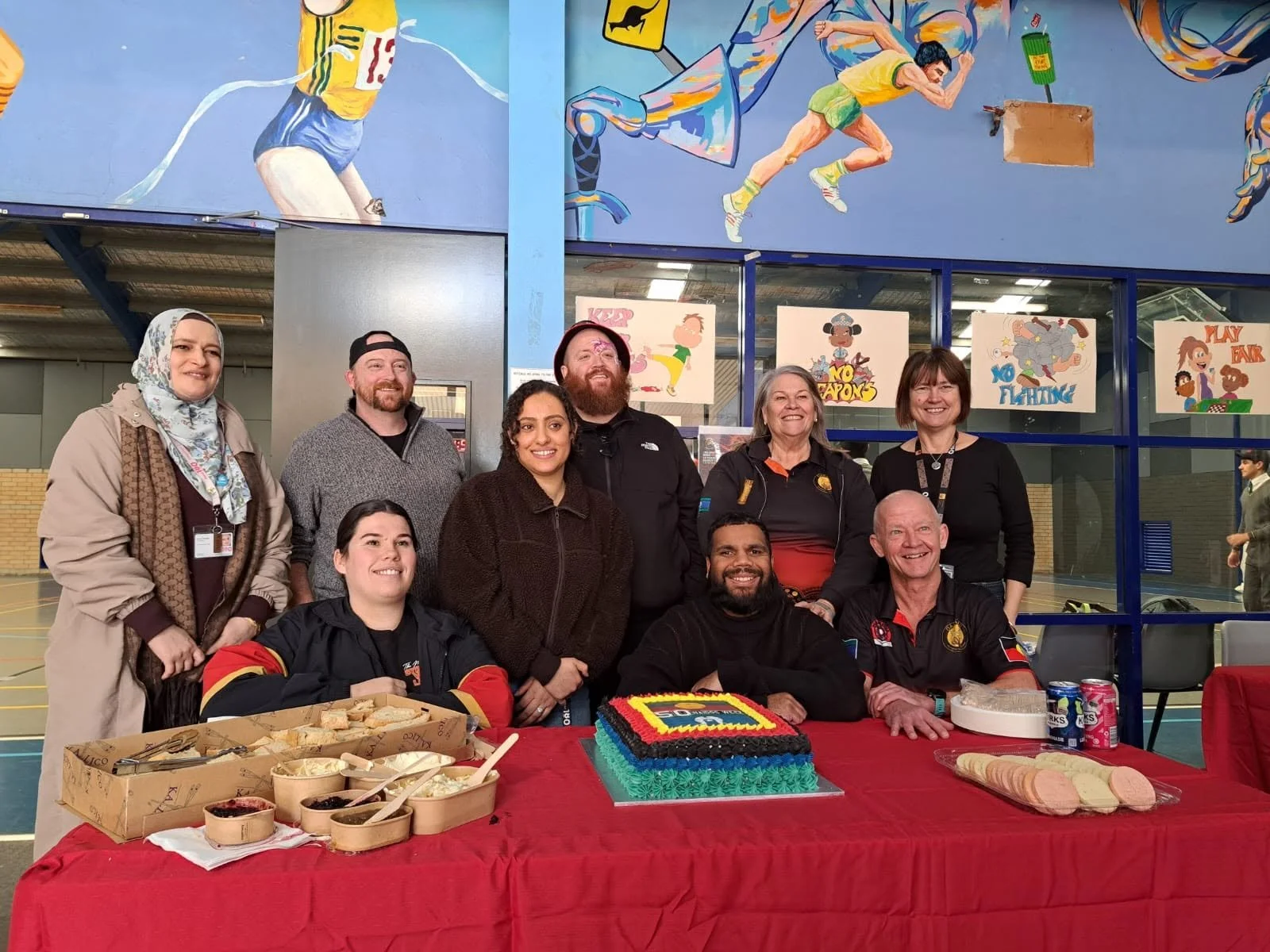
On 31 July, local Aboriginal Elders, young people, families and community members gathered at Marist180’s Emerton Youth Recreation Centre in Western Sydney, New South Wales, for our annual NAIDOC celebration.
This year’s theme, 50 Years of Deadly, celebrates 50 years of Aboriginal and Torres Strait Islander strength, pride and achievement through NAIDOC, while recognising the thousands of generations who have carried culture, knowledge and community long before it.
Elders Lead in Culture
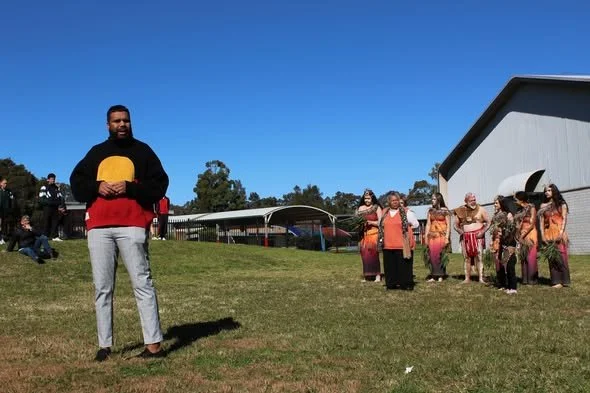
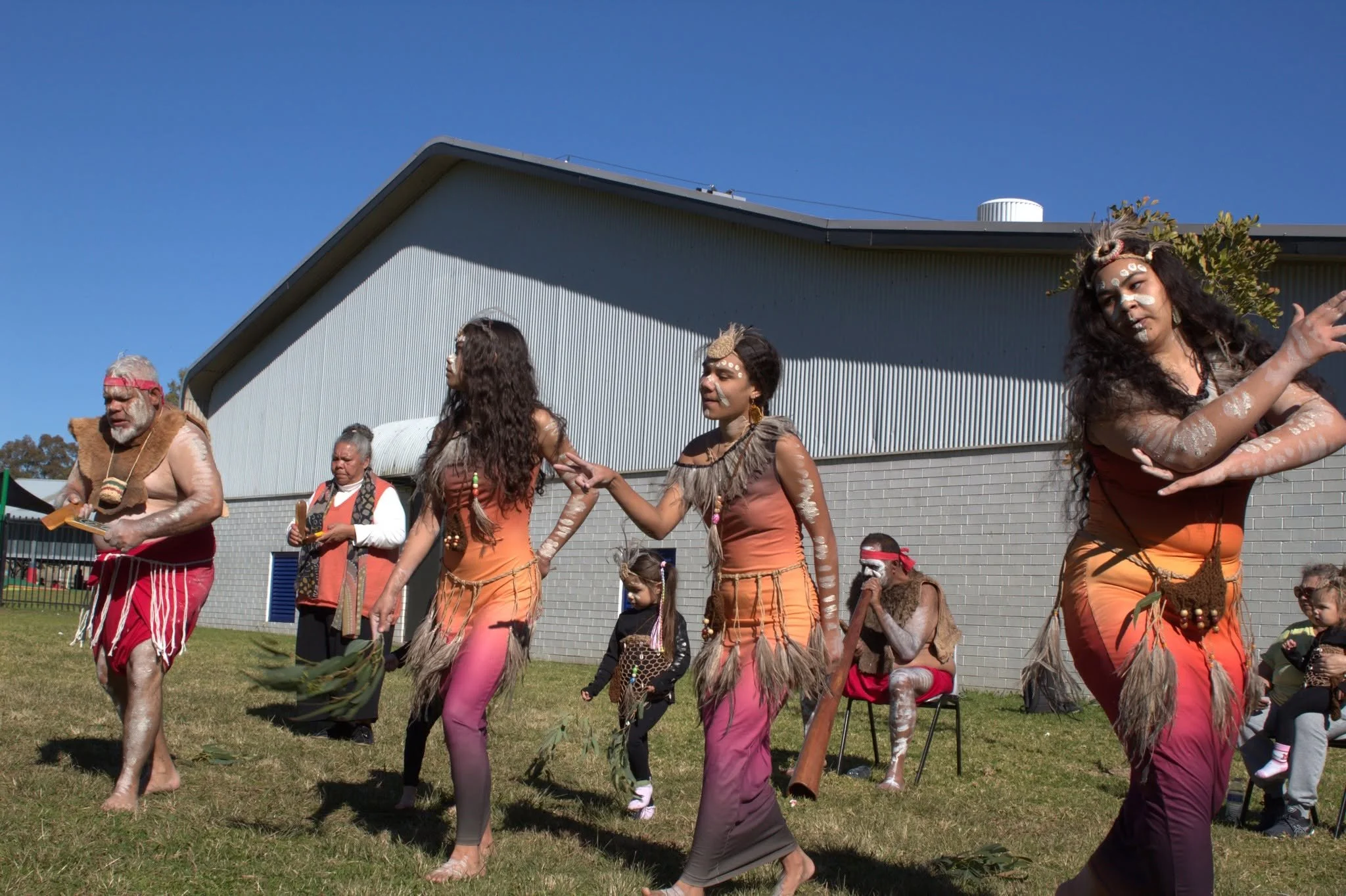
At the heart of the day were Dharug Elder Aunty Cino and our local Elders, generously sharing culture and knowledge. Aunty Cino spoke of welcome, pride and strength, while the Garabara Dance Group shared culture through ceremony, dance and performance.
Culture was experienced in many ways throughout the day. A local Aboriginal artist taught participants about Aboriginal symbols and their meanings, before inviting them to paint their own landscapes on canvas. Their work will form an artwork to be displayed at Marist180’s Community Connection Centre.
Music also brought people together. One particularly moving moment came from one of our young people in our ITC program, who performed an original song capturing something of her own experience of living in care.
Around the centre, young people and families enjoyed face painting, games and a visiting reptile experience, while local community services shared information and connected with families.
Marist Family Connections
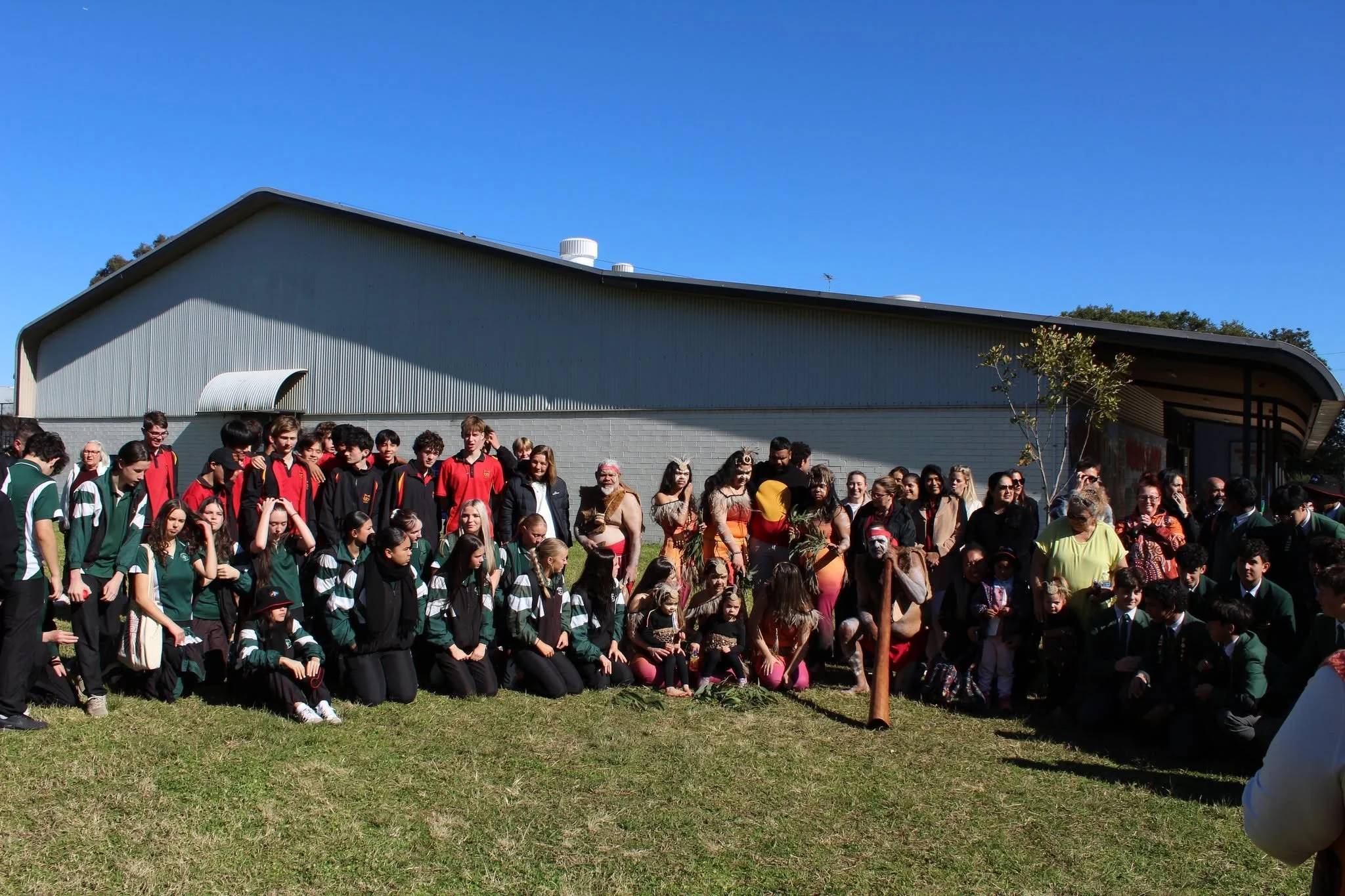
The wider Marist family was there too. Staff and students came from Parramatta Marist High School, the John Berne School, John Therry Catholic College and Marist College Eastwood, with the Eastwood group generously volunteering at the BBQ and helping feed the community.
Acknowledging History, Celebrating Strength and Achievement
Alongside the celebration was space to engage with a difficult part of Australia’s history. The Kinchela Boys Home Aboriginal Corporation Mobile Education Centre brought its survivor-led educational experience to Emerton. A retired commuter bus transformed into a mobile education centre, it uses archival material, exhibitions, film and the testimony of Kinchela survivors, the Uncles, to share the history of Kinchela Boys Home and the Stolen Generations.
Its presence brought another dimension to the day: celebrating Aboriginal culture, strength and achievement while also making space to listen to the histories and experiences carried by Aboriginal people and communities.
Marist180 Staff Unity
Speaking at the celebration, Marist180 Acting CEO Gordon Fraser reflected on the strength, resilience and leadership within Aboriginal and Torres Strait Islander communities and the privilege of working alongside Aboriginal and Torres Strait Islander young people, families, communities and colleagues.
He also acknowledged the knowledge, experience and cultural wisdom of our Aboriginal and Torres Strait Islander colleagues and the often-unseen cultural load they can carry.
As a non-Indigenous organisation, responsibility for learning cannot rest with our Aboriginal and Torres Strait Islander colleagues alone. We all have a role to play in listening, learning, asking respectful questions and building our own understanding.
Helping Young People Thrive
At Marist180, we know that strong connections to culture, family and community help young people thrive. Our hope is that Aboriginal and Torres Strait Islander children and young people can grow up proud of who they are, strong in culture and identity, connected to family and community, and empowered to achieve their aspirations.
As we celebrate 50 Years of Deadly, we honour the generations who have carried culture and knowledge, celebrate the strength and leadership within communities today, and look to the young people who will carry culture forward.
We are grateful to everyone who generously shared their culture, knowledge, talents and time, and to the National Indigenous Australians Agency and Aboriginal Affairs NSW, whose support helped make the celebration possible.
Jane Powles
Partnerships and Advocacy Coordinator, and
Patrick O’Reilly
Director Mission, Inclusion and Identity