
When the Marist Brothers sent four young pioneering members to Australia in 1872, they imagined schools that would provide an opportunity for any student, regardless of means, to receive a quality Catholic education in the Champagnat tradition. Since those earliest days, the subsequent foundation and building of Marist schools has been made possible through the generosity of many supporters and benefactors.
An Early Legacy for the Ministry of the Marist Brothers
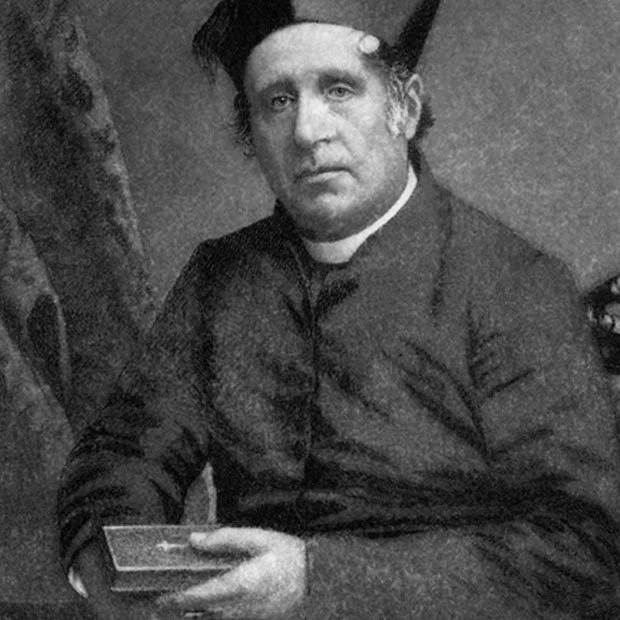
Archdeacon John McEncroe.
Archdeacon John McEncroe (1794-1868) was the earliest benefactor to the Marist Brothers in Australia. He was instrumental in inviting and funding those four Brothers to commence their ministry in a new land. Sadly he died a few years before his dream was realised. In his will, McEncroe provided funds for the passage to Australia, and establishment costs, for Brothers Ludovic, Jarlat, Augustine and Peter, thus enabling them to commence their educative ministry at St Patrick’s School in The Rocks area of Sydney in 1872. McEncroe is regarded as one of the leading advocates for the establishment of Catholic schools in Australia. He was also the successful advocate for the appointment of the Marist Fathers to St Patrick’s Parish in The Rocks, as well as enabling the foundation of St John’s College at the University of Sydney.
Without McEncroe’s advocacy and generous support, the Marist story in Australia might have been very different. He recognised that ministry requires financial support to begin and succeed. This tradition of advocacy and philanthropy has enabled our Marist ministries of education and other youth and welfare services to flourish. Each of our schools and ministries has stories of early fundraising efforts and the first benefactors who enabled their foundation. Without this generous and transformational support, these works may not have begun.
A Christian Understanding of Fundraising
Fundraising is often misunderstood as a purely financial activity, yet within a Christian perspective it can be understood as a genuine ministry. The renowned Dutch theologian, Henri J M Nouwen, in his 1992 essay ”A Spirituality of Fundraising”, argues that fundraising is not begging or coercing people into giving money. It is first and foremost a form of ministry because it connects people to a vision larger than themselves. Nouwen writes that fundraising is “proclaiming what we believe in such a way that we offer people an opportunity to participate with us in our vision and mission.”
Confidence in God’s Abundance
This understanding in a broader context of ministry can transform the fundraiser’s role. Rather than approaching donors from a position of uncertainty, anxiety or even arrogant expectation, Christian fundraisers approach them with humble confidence
in God’s abundance. Jesus teaches this approach when he tells his disciples to “ask and you shall receive” (Matthew 7:7) and not to worry about their needs, reminding them that the Father knows what they require (Matthew 6:25–33). Fundraising, therefore, becomes an act of faith, trusting that God will provide through the generosity of the community.
Nouwen also proposes that fundraising builds relationships. Christian giving is not simply about transferring resources but about creating a partnership in ministry. Donors become co-workers in the Gospel, sharing responsibility for the mission. This insight reflects Paul’s understanding of the Church as the Body of Christ, where each member contributes unique gifts for the good of the whole (1 Corinthians 12:12–27). Financial resources are one such gift, enabling ministries to serve the poor, educate the young, support pastoral work, and advance the mission of Christ.
In the Acts of the Apostles, the early Christian community is described as holding possessions in common and ensuring that no one was in need among them (Acts 2:44–45; 4:32–35). Giving was not merely an economic transaction but a visible sign of communion and commitment to the Gospel. Similarly, St Paul’s collection for the Church in Jerusalem demonstrates that financial support was considered an important aspect of Christian solidarity. Paul encourages believers to give generously and cheerfully, reminding them that “God loves a cheerful giver” (2 Corinthians 9:7). Such passages affirm that, when conducted in service of mission, fundraising is deeply rooted in our Christian tradition.
Christians as Faithful Stewards
Furthermore, fundraising nurtures mutual gratitude and stewardship, and affirms that all gifts ultimately come from God (James 1:17). Christians are therefore called to be faithful stewards, rather than owners and hoarders of their resources. Fundraising invites individuals to recognise God’s blessings in their lives and to respond with generosity. In doing so, it becomes a pathway to spiritual growth, freeing people from excessive attachment to material wealth and encouraging trust in God’s providence.
Champagnat’s Reliance on Benefactors
This understanding of philanthropy also resonates strongly with our Marist spirituality and tradition. St Marcellin Champagnat founded the Little Brothers of Mary in 1817 with very limited resources, but an unwavering trust in God’s providence and Mary’s guidance. Time and again, Champagnat relied upon the generosity of benefactors, local communities, and ordinary people who believed in his mission to educate rural and disadvantaged youth. His requests for support were not driven by institutional ambition or secular kingdom building, but rather by a genuine conviction that every child deserved to experience God’s love and receive a good Christian education. In this sense, Champagnat was engaged in the ministry of fundraising for buildings and bursaries long before the term became common.
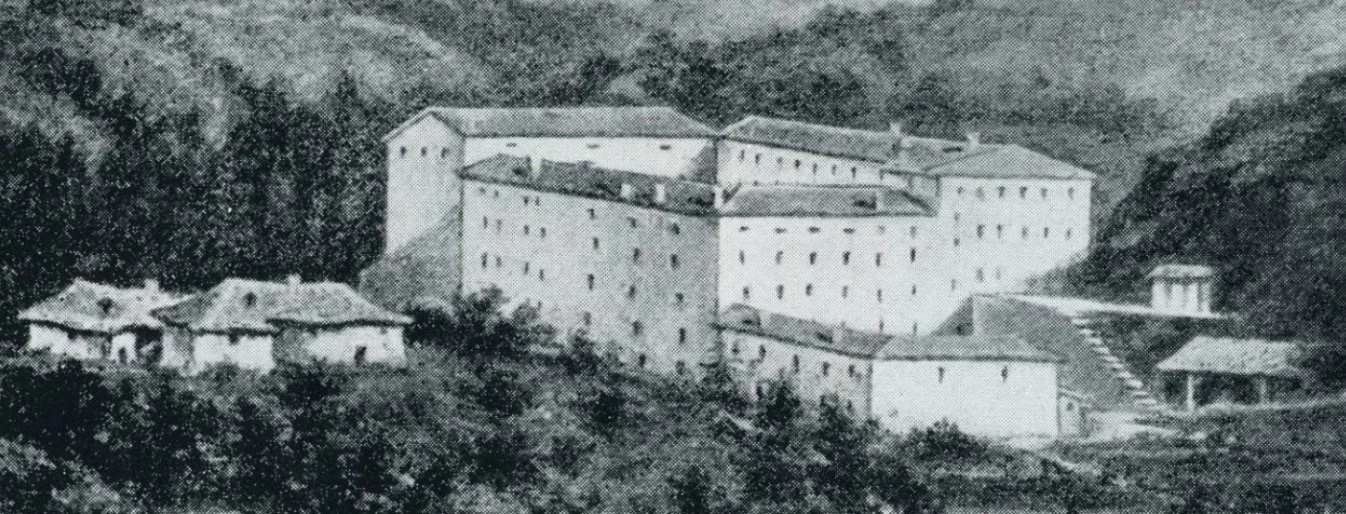
The Hermitage, France, pictured 1935.
In our Marist tradition, fundraising is far more than the pursuit of financial resources and joining the best facilities “arms race”. It is a ministry of invitation, humility, relationship, stewardship, and trust in God’s providence. By inviting others to participate in transforming young lives and making Jesus Christ known and loved in the way of Mary, fundraising becomes a sacred act that strengthens our Marist mission, fosters deeper participation in the life of the Gospel and enables Champagnat’s Marist Project to flourish for future generations.
Richard Quinn
Executive Director
Marist Association of St Marcellin Champagnat